White Sox Among Teams Interested In Griffin Canning

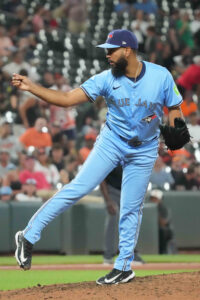
The White Sox have added some depth to the rotation already this winter, signing lefties Anthony Kay and Sean Newcomb to respective two-year and one-year contracts ($12MM for Kay; $4.5MM for Newcomb). Ken Rosenthal and Will Sammon of The Athletic report this morning that the South Siders are still hoping to bring in another veteran arm on a one-year deal, with Griffin Canning among the pitchers they’ve targeted.

There’s no indication that a deal is close. Canning surely isn’t Chicago’s lone target, nor are the White Sox the sole team looking at the possibility of signing him. The fit between the two parties is a fairly sensible one, however.

Canning, 30 in May, is a former second-round pick and top prospect with the Angels. He showed flashes of making good on that potential across parts of five seasons with the Halos, but injuries repeatedly set him back. The Angels eventually swapped him out for Jorge Soler in a Nov. 2024 deal with the Braves. Atlanta non-tendered him a few weeks later. Canning went on to sign a one-year deal with the Mets.

Early in the 2025 campaign, that low-cost pickup looked like a steal for the Mets. Thrust into the rotation mix after spring injuries to Frankie Montas and Sean Manaea, Canning raced out of the gates with a 2.47 ERA, 23.2% strikeout rate, 8.6% walk rate and gaudy 55.2% ground-ball rate in his first nine starts. Fielding-independent metrics like SIERA (3.84) and FIP (3.92) weren’t quite as bullish as his earned run average, but Canning very much looked the part of a quality mid-rotation arm over that span of nearly two months.

The right-hander then ran into some troubles with his command, issuing 18 walks over his next 26 1/3 frames. His numbers obviously took a step back along the way, and Canning never got much of a chance to right the ship. He was through 2 2/3 spotless innings against the Braves on June 26 when he suffered a ruptured Achilles tendon that ended his season. Overall, Canning closed out the year with a 3.77 ERA, 21.3% strikeout rate, 10.7% walk rate and 50.9% grounder rate.

The uptick in grounders was a new development for Canning, who’d previously carried just a 39.5% ground-ball rate in his career. The Mets scrapped his prior curveball in favor of a knuckle curve, but the more prominent factor in his newfound success in that regard were changes to his slider and changeup, which generated grounders at respective rates of 57% and 62%. Canning threw his slider at career-high levels in ’25 and used his four-seamer at a career-low mark (while also averaging 94.1 mph on the pitch — second-best in his career).

Discouraging as his finish to the season was, Canning showed enough in his 16 starts with the Mets to command a big league deal this winter. He’s a relative upside play, which makes him a good fit for a club that can promise him a rotation spot and trot him out every fifth day. The White Sox, still working through another rebuilding effort, can afford that opportunity far more easily than a clear-cut contender.

At the moment, each of Kay, Shane Smith, Sean Burke and Davis Martin appear locked into manager Will Venable’s rotation. Newcomb could compete for a starting gig this spring but spent more time in the bullpen in recent seasons. Jonathan Cannon will be in the mix but has a minor league option remaining. Top prospects Noah Schultz and Hagen Smith could both debut in 2026, but each could probably use some more minor league time. Smith hasn’t pitched at all in Triple-A, and Schultz struggled mightily there in five starts (9.37 ERA) after a much stronger showing in Double-A. Both southpaws could stand to improve their command, in particular.

Whether it’s Canning or another veteran, there appears to be ample room for at least one more arm in the White Sox’ rotation. Kay is looking to continue his NPB breakout but has never had much big league success. Smith (a 2024 Rule 5 pick) and Burke only have one season of solid results in the majors. Martin has pitched like a fourth or fifth starter in parts of three MLB seasons. Smith, Martin and Burke all have minor league options remaining.

At the moment, RosterResource projects just an $87MM payroll for the White Sox. That’s over $100MM shy of their franchise-record mark, set back in 2022 ($193MM). The Sox carried just a $75MM payroll on Opening Day last year but were well over $100MM in both 2024 ($123MM) and in 2023 ($181MM).

Source: https://www.mlbtraderumors.com/2026/01/white-sox-rumors-griffin-canning-free-agent-pitcher.html
 
White Sox Claim Drew Romo, Designate Ben Cowles

The White Sox have claimed catcher Drew Romo off waivers from the Mets, according to a club announcement. Chicago designated infielder Ben Cowles for assignment in order to open a spot for Romo on the 40-man roster.

The No. 35 overall pick by the Rockies back in 2020, Romo garnered some top-100 fanfare earlier in his prospect days but has seen his bat stall out after a nice 2023 season between High-A and Double-A. He’s still a quality defensive catcher with a rocket arm behind the plate, but Romo’s offensive output at Triple-A has declined in consecutive seasons. He hit .264/.329/.409 (75 wRC+) in an extremely hitter-friendly Triple-A Albuquerque setting in 2025 and saw his strikeout rate balloon from 17.8% in ’24 to 25.8%.

The Rockies gave Romo a couple brief looks in the majors, but he totaled only 56 plate appearances and logged a .167/.196/.222 slash with a sky-high 37.5% strikeout rate. He still has a pair of minor league option years remaining, so he’ll give the South Siders some defensive-minded depth behind the plate.

The Sox have Kyle Teel and Edgar Quero on the big league roster already. Both were top-100 prospects this time a year ago. Quero held his own in his 2025 MLB debut (.268/.333/.356 in 403 plate appearances), and Teel excelled at the plate. In 297 trips to the batter’s box, Teel slashed .273/.375/.411 (125 wRC+) with a big 12.5% walk rate. Given that he not only outproduced Quero but also grades out as a vastly better defender, Teel staked his claim to the starting job in 2026 and beyond. Twenty-seven-year-old Korey Lee, who’s out of minor league options, will also have to break camp with the team (if he’s not traded first) or else be designated for assignment.

Both Teel and Quero have drawn offseason trade interest, though that doesn’t mean a move will come to fruition. Other clubs have called the White Sox about that catching tandem — not vice versa — which is only natural, given the scarcity of quality catchers in the game and the ever-increasing emphasis on cultivating young, controllable talent. Claiming another catcher doesn’t indicate that the Sox are more seriously considering a trade of either Teel or Quero; it’s more likely a mere matter of adding some depth (particularly some optionable depth, as Lee’s hold on his roster spot figures to be a bit tenuous).

As for Cowles, who’ll turn 26 next month, he’s a former tenth-round pick by the Yankees who has already twice changed teams in his pro career. New York shipped him to the Cubs alongside Jack Neely in the 2024 Mark Leiter Jr. trade, and the White Sox claimed him off waivers about 13 months later.

Cowles has yet to take a plate appearance in the majors. He split the ’25 season between the Triple-A clubs for the two Chicago teams, slashing a combined .235/.300/.371 with nine homers, 18 steals, a 7.2% walk rate and a 28.8% strikeout rate. He’s viewed as a serviceable defender at shortstop who can also handle second base and third base, giving him a chance to carve out a role as a utility player.

Although his 2025 numbers were ugly, Cowles hit .286/.372/.457 with nine homers, 14 steals, a 10.4% walk rate and a 17.7% strikeout rate in 92 Double-A games during the 2024 season. Between that production, his solid glove/speed combination, and a pair of remaining minor league option years, there’s a chance he’ll be picked up by another club hoping to secure some optionable infield depth.

Source: https://www.mlbtraderumors.com/2026/01/white-sox-claim-drew-romo-waivers-mets-dfa-ben-cowles.html
 
Yankees Have Shown Interest In Nico Hoerner, Luis Robert Jr.

At the start of the offseason, it felt inevitable that the Yankees and Cody Bellinger would reunite. That may still happen but it seems up in the air at the moment. Talks between the two sides have seemingly stalled out. Jon Heyman of The New York Post reports today that both sides have been exploring alternatives lately. Bellinger has interest from other clubs. Meanwhile, the Yankees have been touching base with free agents Bo Bichette and Kyle Tucker, who they have been connected to previously. They’ve also checked in on trade candidates Luis Robert Jr. of the White Sox and Nico Hoerner of the Cubs. The Yanks’ interest in Hoerner was first reported by Pat Ragazzo of SI.

Bellinger spent 2025 in the Bronx and it seemed to go well. He hit 29 home runs and slashed .27/.334/.480 for a wRC+ 125. He stole 13 bases and played all three outfield slots as well as first base. He appeared to be especially comfortable in Yankee Stadium, slashing .302/.365/.544 there. He opted out of the final season of his contract, taking a $5MM buyout and leaving a $25MM salary on the table. At the start of the offseason, MLBTR predicted Bellinger to have enough juice for a five-year, $140MM deal.

It was reported on New Year’s Day that the Yanks had made an offer to Bellinger. A few days later came reports of a second offer. No details of either offer were initially revealed but further reporting indicated the sides weren’t close to a deal. Subsequent reporting has put the Yankee offer at five years and over $30MM annually, putting the guarantee somewhere in the vicinity of $155MM. That hasn’t been enough to get a deal done with Bellinger hoping to get to seven years.

It seems the two sides have taken a break from the staredown to look elsewhere. Heyman says they continued talking over the weekend but each party is considering alternatives. Heyman mentions the Dodgers, Giants and Mets as clubs believed to have interest in Bellinger. Those clubs have all been tied to Bellinger via rumors earlier this winter but are imperfect fits. All three could use outfield help to varying degrees but they also appear to be trying to avoid long-term commitments at the moment.

Since the hold-up between the Yankees and Bellinger appears to be the length of their offer, it’s hard to envision any of these clubs outbidding the Yankees. Any of the three could perhaps change their stance to take advantage of this opportunity but it also could be more likely that those clubs would prefer to get Bellinger via another short-term, opt-out laden deal. It’s unclear if he would want to do that after going down that road a couple of years ago, but it presumably depends on where things go in the next few weeks.

The Blue Jays have also been connected to Bellinger this winter but it seems they are more focused on Bichette and Tucker with Bellinger perhaps a backup plan. The Cubs were also connected to their old friend Bellinger this winter but signing Alex Bregman is presumably their big splash of the winter.

For the Yankees, they could perhaps increase their offer but are also seeing what else is on the menu. With Hoerner, it’s unclear if the Cubs have any interest in trading him but he has been in rumors and it’s arguable they should consider it. Hoerner is a good player but is a free agent after 2026. With the Cubs recently signing Bregman, their infield is now a bit cluttered. Putting Bregman at third bumps Matt Shaw to the bench.

If they wanted to, the Cubs could trade Hoerner and then move Shaw to second base. That would declutter things a bit and also should bring back something of note. Hoerner’s $12MM salary this year is very affordable considering his production. He doesn’t hit a ton of home runs but rarely strikes out, relying on his contact, speed and defense to provide value. It’s a combination that works, as FanGraphs has credited him with 3.9 wins above replacement or more in each of the past four years.

It could also give the Cubs a bit more breathing room in terms of the competitive balance tax. The Cubs went narrowly above the CBT in 2024 but have otherwise stayed under the line in each season from 2021 to the present.

RosterResource currently estimates them for a CBT number of just over $243MM, putting them less than a million from this year’s line. A team’s CBT number isn’t calculated until the end of the year, so in-season moves can move a club up or down. If the Cubs want to avoid the tax in 2026, creating some space now could be something they consider to give them more ability to make moves at the deadline.

For the Yankees, Hoerner wouldn’t help replace Bellinger in the outfield but he should make the team better. Though he has largely been a second baseman for the Cubs, he is considered good enough to be a shortstop. He has just been on the other side of the bag in deference to Dansby Swanson.

The Yanks have an uncertain shortstop situation at present, hence their previous connection to Bichette. Anthony Volpe is coming off a down year and may not be ready for Opening Day 2026 as he recovers from shoulder surgery. José Caballero currently projects as the top shortstop for the early season, though he has mostly been a utility guy in his career. If the Yanks add a shortstop, then he could return to that role.

The thinking with signing Bichette had a couple of attractions. He could upgrade the shortstop position now, then second base in the future. Jazz Chisholm Jr. is currently the club’s second baseman but he is slated for free agency after the upcoming season. With the Yanks having shortstop prospect George Lombard Jr. waiting in the wings, Bichette could cover short for a year and then slide to the other side of the bag with either Lombard or a resurgent Volpe at short.

Hoener wouldn’t be quite the same acquisition, barring an extension, as he is only signed through 2026. Still, that would likely have appeal for the Yankees in a different way. They could upgrade the middle infield for now without making a huge commitment. After 2026, depending on how things go with Lombard, Volpe, Hoerner and Chisholm, they could then decide about how to invest in the middle infield for the long term.

They would, however, have to give the Cubs something of value in return. As mentioned, it’s unclear if the Cubs have any interest at all in flipping Hoerner. Even if they do, they would presumably be looking for some kind of win-now upgrade, likely on the pitching staff. With the Yanks looking for pitching help themselves, it may be challenging to line up a deal that makes sense for both sides.

As for Robert, he is surely available but also tricky to value. He has shown borderline MVP upside but is coming off two years marred by injuries and underperformance. In 2023, he hit 38 home runs and stole 20 bases, slashed .264/.315/.542 and got strong grades for his center field defense. But since then, he has made a number of trips to the injured list while slashing .223/.288/.372 for a wRC+ of 84.

The White Sox are rebuilding and will surely trade Robert but are seemingly hoping to trade him at peak value. He wasn’t moved in 2025 even though it was the final guaranteed year of his contract. They picked up a $20MM option for 2026. Teams like the Yankees and others might want to buy low but the Sox are likely motivated to wait. After his down year, it would make sense to hold him until the deadline, with the hope of him getting back in form and therefore increasing his trade value.

The Yankee outfield currently projects to include Aaron Judge and Trent Grisham in two spots. If the season started today, Jasson Domínguez and Spencer Jones would battle for a third. Domínguez is coming off a rough year in 2025, with an average bat and poor defense. Jones hit 35 home runs in the minors last year but also struck out 35.4% of the time, creating some doubt about how viable his bat will be in the majors.

Acquiring Hoerner wouldn’t do much to change that picture but perhaps the Yanks would be more comfortable with the uncertainty of the Domínguez/Jones combo with a stronger infield. Bringing back Bellinger, signing Tucker or acquiring Robert would strengthen the outfield group, bumping Domínguez to more of a part-time role and keeping Jones in Triple-A.

There are many moving pieces here as the offseason moves into the final weeks before pitchers and catchers report to spring training. Tucker, Bichette and Bellinger are the top position players still out there, with a lot of overlapping interest. The Jays are seemingly in on all three, considered by some to be the favorites for Tucker but a Bichette reunion also makes sense. Like Bellinger, Bichette is considering other options. He is meeting with the Phillies today, although that is a bit complicated, as Philadelphia would seemingly have to move on from both J.T. Realmuto and Alec Bohm to fit Bichette onto the roster and into the budget. The Red Sox just missed on Bregman and could turn to Bichette but they don’t seem too keen on big long-term investments. The Dodgers, Giants and Mets may be looking to get opportunistic if a nice short-term opportunity becomes possible.

It’s a bit of a game of musical chairs with the Yankees and Bellinger some of the key participants. Bregman just found a seat in Chicago but others will have to sit soon. Pitchers and catchers report to spring training in about a month, so the music is slowing down.

Photo courtesy of Sergio Estrada, Imagn Images

Source: https://www.mlbtraderumors.com/2026...-interest-in-nico-hoerner-luis-robert-jr.html
 
Cubs Claim Ben Cowles

The Cubs have claimed infielder Ben Cowles off waivers from the White Sox, per a team announcement. The Sox designated Cowles for assignment one week ago when they claimed catcher Drew Romo off waivers from the Mets.

Cowles lands back with the Cubs, who designated him for assignment back in September. They originally acquired the former Yankees tenth-rounder as part of the trade sending Mark Leiter Jr. to the Bronx. The White Sox claimed him a few days later, but it’ll just be a stay of a few months with the South Siders before heading north back to the Cubs.

The 25-year-old Cowles has yet to take a plate appearance in the majors. He split 2025 between the Triple-A clubs for the two Chicago teams, slashing a combined .235/.300/.371 with nine homers, 18 steals, a 7.2% walk rate and a 28.8% strikeout rate. He’s viewed as a serviceable defender at shortstop who can also handle second base and third base, giving him a chance to carve out a role as a utility player.

Although his 2025 numbers were ugly, Cowles hit .286/.372/.457 with nine homers, 14 steals, a 10.4% walk rate and a 17.7% strikeout rate in 92 Double-A games during the 2024 season. He still has a pair of minor league option years remaining, so he’ll give the Cubs some depth around an infield that became more crowded with this week’s signing of Alex Bregman. That signing already pushed Matt Shaw into a utility role, meaning Cowles will likely open the season with the Cubs’ Triple-A club in Des Moines — if he sticks with the organization until Opening Day.

Source: https://www.mlbtraderumors.com/2026/01/cubs-claim-ben-cowles-waivers-white-sox.html
 
White Sox Interested In Michael Conforto

The White Sox have some interest in free agent outfielder Michael Conforto, according to Jon Heyman of The New York Post. Conforto was with the Dodgers in 2025 but never seemed likely to return there even before Los Angeles made their stunning agreement with Kyle Tucker last night.

Conforto, 33 in March, is coming off a few down years. His best stretch of play was with the Mets earlier in his career. Through the end of the 2020 season, he had 623 games under his belt, with a .259/.358/.484 line and 128 wRC+. He was good for 30ish home runs from 2017 to 2019 and then hit nine over the fence in the shortened 2020 season.

He hasn’t really been at that level since. His production scuffled in 2021, with just 14 home runs and total offense closer to league average. Shoulder surgery wiped out his 2022 season entirely. He then signed a two-year deal with the Giants. In 2023, he was again around league average overall, with 15 home runs for the year.

The second year of that pact was a bit more encouraging. Conforto hit 20 home runs and slashed .237/.309/.450. That line was 12% better than league average by measure of wRC+. That wasn’t up to his prime years with the Mets but was his best showing in a while.

It was also possible to squint and see the potential for more. His first half was interrupted by a hamstring strain and he never seemed to get into a groove. He stayed healthy in the second half and caught fire, with a .272/.337/.543 line and 143 wRC+ in his final 169 plate appearances.

The Dodgers decided to make a bet on that hot finish, signing Conforto to a one-year pact worth $17MM but with deferrals. That didn’t work out. Conforto slashed .199/.305/.333 on the year for an 83 wRC+. The Dodgers did not carry him on the roster into the postseason.

After that down season, his earning power should be lower than it was a year ago. He would therefore make sense for the White Sox as a buy-low option who theoretically has some upside. He has only sporadically shown that upside lately but even his down 2025 season had some theoretical reasons for optimism.

His 11.5% walk rate last year was quite strong. His 24.9% strikeout rate a tad high but pretty normal for him. His .247 batting average on balls in play was quite low, so he may have had poor luck on the year. His Statcast data wasn’t elite but wasn’t poor either. His bat speed was in the 77th percentile of big leaguers. His barrel rate was 56th, his hard hit rate 53rd and his average exit velocity 48th.

The Sox are deep in a rebuild and won’t be contending soon. They would be one of the clubs best suited to take a flier on Conforto and hope for a return to form, as a contending club would presumably prefer a player with a more impressive recent track record. If he has a strong first half, he could then be flipped at the trade deadline for a prospect or two.

Chicago’s outfield currently projects to include Luis Robert Jr. and Andrew Benintendi in two spots. Those two are themselves candidates to be traded this year. They could each also stand to spend some time in the designated hitter slot, given their injury histories.

Brooks Baldwin, Tristan Peters, Derek Hill, Everson Pereira and some other young players should be in the mix for outfield playing time. Baldwin and Peters still have options and could be sent to the minors. Hill and Pereira are out of options but are the kind of fringe roster players who could clear waivers and be outrighted to the minors as non-roster depth.

With Tucker now signed, the outfield free agent market has Cody Bellinger up top and then a notable gap to the other options. Harrison Bader would arguably be the second-best option, with guys like Conforto, Mike Tauchman, Austin Hays, Miguel Andujar and others forming the next tier. Max Kepler would have been in this cluster somewhere but he recently received an 80-game PED suspension. That cuts into his appeal both because he’ll miss the first half of the season and then wouldn’t be eligible for the postseason.

Photo courtesy of Jayne Kamin-Oncea, Imagn Images

Source: https://www.mlbtraderumors.com/2026/01/white-sox-rumors-michael-conforto.html
 
Wilbur Wood Passes Away

Longtime big league knuckleballer Wilbur Wood passed away on Saturday at age 84. A left-handed workhorse starter, Wood was a three-time All-Star over a 17-year MLB career that included stints with the White Sox, Pirates, and Red Sox.

It took Wood a while to really establish himself in the big leagues, as after making his MLB debut with Boston in 1961, Wood threw only 159 2/3 innings over 73 appearances from 1961-65. A trade from the Red Sox to the Pirates in 1964 at least gave Wood regular bullpen duty during the 1965 season, but after spending the entire 1966 campaign with Pittsburgh’s Triple-A team, he was traded to the White Sox in the move that really unlocked Wood’s career.

Future Hall-of-Famer Hoyt Wilhelm was a member of that Chicago team, and the veteran took Wood under his wing by teaching him some of the tricks of Wilhelm’s knuckleball. Wood had thrown the pitch on-and-off in the past, but under Wilhelm’s tutelage and encourage, Wood adopted the pitch on a regular basis and the rest was history. Over 292 games and 495 2/3 innings from 1967-70, Wood posted a 2.49 ERA as a fireman out of the White Sox bullpen, often tossing multiple innings in all sorts of situations as a closer, leverage set-up man, or just innings-eater.

The White Sox moved Wood back into the rotation in advance of the 1971 season, setting the table for a five-year run of numbers that seems impossible by today’s modern pitching standards. Wood posted a 3.08 ERA over 227 appearances (224 of them starts) and a whopping 1681 2/3 innings from 1971-75, leading the majors in starts four times over that span and twice leading MLB in innings. Wood’s success was recognized with a runner-up finish in AL Cy Young Award voting in 1972, and he also finished third in the Cy race in 1971 and fifth in 1973. Wood was named to the AL All-Star team in 1971, 1972, and 1974.

Even in an era when starters were expected to carry a heavier workload and four-man rotations weren’t uncommon, Wood’s knuckler-powered durability stood out. Wood’s 376 2/3 IP in 1972 is the highest single-season mark of any pitcher from 1918 to the present day. To put Wood’s 1972 season in perspective, MLB’s top two leaders in innings pitched in 2025 (Logan Webb and Garrett Crochet) combined for 412 1/3 innings last year.

Unfortunately for Wood, the White Sox weren’t particularly competitive during his five-year dream run. He became one of only a few pitchers in modern baseball history to both win and lose 20 games in a season when Wood went 24-20 in 1973. Wood won at least 20 games every year from 1971-74, and he also lost 20 more games in 1975.

Wood’s amazing run of durability ended when his kneecap was broken by a line drive off the bat of the Tigers’ Ron LeFlore in May 1976, which ended his season. Wood was never the same after the injury, as the southpaw posted a 5.11 ERA over 290 2/3 innings for Chicago in 1977-78. He decided to retire, concluding his career with a 164-156 record, a 3.24 ERA, 6.5% walk rate, and 12.7% strikeout rate over 651 games and 2684 innings.

We at MLB Trade Rumors send our condolences to Wood’s family, loved ones, and many fans.

Source: https://www.mlbtraderumors.com/2026/01/wilbur-wood-passes-away.html
 
White Sox Sign Ryan Borucki To Minor League Deal

The White Sox announced that left-hander Ryan Borucki has been signed to a minor league deal that contains an invitation to Chicago’s big league Spring Training camp. It’s something of a homecoming for Borucki, who grew up just north of Chicago in Mundelein, Illinois.

With eight MLB seasons under his belt, Borucki brings a lot of veteran know-how to an overall inexperienced White Sox relief corps. Though Chicago’s priority during a rebuild is still giving innings to these younger pitchers, having a seasoned reliever like Borucki around might be helpful if Borucki pitches well enough in camp to earn a roster spot. Brandon Eisert and Tyler Gilbert (likely the two top left-handed options in the Sox pen) are coming off so-so performances in 2025, so Borucki also provides some added southpaw depth.

Borucki has plenty to prove himself, however, as his struggles against right-handed batters and his inability to keep the ball in the park have led to middling results. Over 256 1/3 career innings in the Show, Borucki has a 4.28 ERA, 19.7K%, and 8.9BB%. While Borucki has been prone to allowing home runs, he has done a good job of avoiding fly balls in general, with a 51.8% grounder rate over 135 1/3 innings from 2021-25.

In 2025, Borucki posted a 4.63 ERA, 22% strikeout rate, and 11% walk rate over 35 innings with the Pirates and Blue Jays, while missing about six weeks due to a back injury. He signed a minor league deal with Pittsburgh last winter, and caught on with Toronto (his original team) on another minors contract after being released by the Bucs in August, but the Jays also designated Borucki for assignment and then outrighted him in September after four MLB outings.

Source: https://www.mlbtraderumors.com/2026/01/white-sox-sign-ryan-borucki-to-minor-league-deal.html
 
White Sox Trade Luis Robert Jr. To Mets

The long-awaited Luis Robert Jr. trade has arrived. The Mets announced they’ve acquired the former All-Star center fielder from the White Sox for young infielder/outfielder Luisangel Acuña and minor league right-hander Truman Pauley. There’s no cash involved and no corresponding moves because Robert and Acuña were each on the 40-man roster.

This brings an end to what had been years of Robert trade rumors. The White Sox have held their center fielder through multiple rebuilding seasons. In retrospect, they surely wish they’d moved him over the 2023-24 offseason. Robert was coming off a career year and looked like a budding star entering the prime of his career. The past two seasons have been more challenging, as he has battled injuries and struggled while fielding questions about when he would be traded.

Robert was a high-profile prospect when he signed with the Sox out of Cuba in 2017. He commanded a $26MM bonus, the kind of hefty sum for an international amateur that would subsequently be prohibited in the collective bargaining agreement. Robert’s dominant minor league performance further spurred optimism, and the White Sox signed him to a $50MM extension over the 2019-20 offseason. At the time, it was the largest extension for a player who had to make his MLB debut, and it ensured he’d break camp in 2020 without any kind of service time games.

While that year’s schedule would be shortened by the pandemic, Robert popped 11 homers and won a Gold Glove in center field. He placed second in Rookie of the Year balloting. Robert’s numbers jumped in year two, as he hit .338/.378/.567 across 296 plate appearances. A torn flexor tendon in his right hip cost him three months, however, and the blend of tantalizing talent and frustrating durability would be a recurring theme in his career.

USATSI_26845956-200x300.jpg


Robert had a trio of injured list stints, albeit all for minor issues, the following season. He stayed healthy for almost all of the ’23 campaign and showed the star-level ceiling he possesses at full strength. Robert drilled 38 homers, 36 doubles and one triple across 595 plate appearances. He hit .264/.315/.542 to win a Silver Slugger Award. FanGraphs and Baseball Reference each valued his season around five wins above replacement after accounting for his excellent center field defense.

The White Sox nevertheless went 61-101 and were outscored by 200 runs. It was clear they were amidst a multi-year teardown, but they elected to hang onto Robert when they had four years of affordable contractual control. They could have netted multiple top prospects if they’d shopped him.

Robert’s production has tanked as the team has slogged through two more terrible seasons. He’s a .223/.288/.372 hitter in 856 plate appearances since the start of 2024. He has struck out at a near-30% rate while continuing to battle injuries. The right hip flared up early in the ’24 season and kept him out for two months. A pair of left hamstring strains were the culprit last summer, with the latter costing him all of September.

The physical tools remain encouraging. Robert is one of the fastest players in the league despite the various lower body injuries. He ranks in the 92nd percentile in bat speed, according to Statcast. He’s an aggressive hitter who is always going to have his share of strikeouts. Teams would happily live with a lower on-base percentage if he’s making the kind of power and defensive impact he did during his best days in Chicago.

It’s largely a change-of-scenery bet from the Mets’ perspective. Robert only turned 28 in August and hasn’t shown signs of physical decline. He has spent the past three seasons on one of the worst teams in MLB, fully aware that he’d be traded at some point. A new environment could help him get back on track, although the durability concerns will persist even if his numbers improve.

Robert will at least upgrade the defense and bring some upside on the bases. He has stolen 20+ bags in three straight seasons and went 33-41 in stolen base attempts last year. He should also bring some juice against left-handed pitching, as he’s a career .293/.367/.505 hitter with the platoon advantage. His production against southpaws tanked in 2024 but rebounded last season.

The biggest risk for the Mets is financial. They’re assuming the entirety of Robert’s $20MM salary and committing to a $2MM buyout on a $20MM club option for the 2027 season. It’s not a small amount to spend on a player who hasn’t produced much over the past two years, and that’s before considering the tax implications.

The Mets pay a 110% tax on spending as a three-time repeat luxury tax payor whose CBT payroll is above $304MM. Robert is guaranteed $22MM for one season — the option buyout is guaranteed money — so they’re tagged with a $24.2MM tax hit. It’s a $46.2MM commitment overall, albeit one that comes with the upside of what could be a bargain option in ’27 if Robert hits his ceiling. RosterResource calculate their CBT number around $357MM, putting them on track to exceed last year’s season-ending $347MM mark — which required a $91.6MM tax payment. There’s a good chance they’ll have a tax bill north of $100MM by the end of the ’26 season.

They’ve taken on $64MM in AAV commitments for the 2026 season between the Robert trade and Bo Bichette signing over the past five days. The Mets haven’t wanted to lock themselves into lengthy deals one offseason after the Juan Soto signing. They’ve compensated with significant short-term investments to chase upside. Robert should be the everyday center fielder as long as he’s healthy. That’d push Tyrone Taylor either into a fourth outfield role or as a stopgap in left field if prospects Carson Benge and Jett Williams open the season in Triple-A. It seems likely to take them out of the running on Cody Bellinger, the top unsigned position player.

Although the White Sox missed their opportunity to trade Robert at the apex of his value, they deserve some credit for exercising this year’s option rather than cutting him loose for nothing in free agency. That at least netted them an intriguing depth piece in Acuña, who felt superfluous on the Mets but is a fine target for a rebuilding team.

The younger brother of Ronald Acuña Jr., Luisangel is a former Rangers signee whom the Mets acquired in the 2023 Max Scherzer deadline deal. His bloodlines and previous inclusion in one marquee trade have made him a more well-known prospect than his production probably warrants, but he’s not yet 24 and provides some multi-positional utility for skipper Will Venable.

Acuña signed as a shortstop and has the arm strength to profile on the left side of the infield. There weren’t many shortstop reps available on a team with Francisco Lindor, leading the Mets to bounce him around in a utility capacity. Acuña has plus-plus speed and could be an option in center field as well. He’s splitting his time between shortstop and center field in the Venezuelan winter league, but the majority of his MLB experience has come as a second baseman.

USATSI_26636464-222x300.jpg


The White Sox shouldn’t have any issue getting Acuña in the lineup even if he’s not expected to push Colson Montgomery off shortstop. He could step into the everyday center field role vacated by the Robert trade or push for second/third base playing time alongside Chase Meidroth, Miguel Vargas and Lenyn Sosa.

The question is whether Acuña will bring enough to the table offensively to warrant playing time once the Sox are better positioned to contend. He’s a .248/.299/.341 hitter in his first 233 MLB plate appearances. Acuña has had a similarly light bat against Triple-A pitching. The right-handed hitter owns a .265/.307/.360 line in more than 700 trips to the plate at the top minor league level. Acuña has solid contact skills but puts a lot of balls on the ground without big exit velocities. He’s a slash-and-dash type hitter whose best current ability is as a runner, where he went 16-17 in stolen base tries over 95 MLB games last year.

Acuña is out of minor league options, so the White Sox will need to keep him on the MLB roster. They wouldn’t have traded Robert for him if they didn’t intend to do so. The lack of roster flexibility was a much bigger hangup for the Mets, who also cannot option Mark Vientos and are unlikely to send Brett Baty back to Triple-A. They knew they’d lose Acuña on waivers but weren’t positioned to offer him the playing time to take a step forward offensively. Chicago can control him through the 2031 season, as Acuña has yet to reach a year of MLB service.

The White Sox also add a low minors arm in Pauley, a 6’2″ righty whom the Mets took in the 12th round of last year’s draft. The Harvard product received an above-slot $400K signing bonus. Baseball America ranked him the #435 prospect in the draft, writing in June that teams like the riding life on his mid-90s fastball and plus spin rates on his breaking ball. Pauley walked more than 15% of opponents with a 4.61 ERA in his draft year. His command will need to take a significant leap if he’s to get to the majors, even as a reliever, but the Sox’s player development team is clearly intrigued by his raw stuff.

From a payroll standpoint, dealing Robert drops Chicago’s projected spending to $67MM. They opened last season around $81MM, so this could free them up for a late-offseason depth addition or two. The Sox could bring in a veteran middle reliever and/or a fourth outfielder whom they’d try to flip for another lottery ticket prospect in the Pauley mold at the deadline.

Jeff Passan of ESPN was first on the trade terms. Jon Heyman of The New York Post reported that the Mets were assuming the full salary. Respective images courtesy of Kamil Krzaczynski, Jay Biggerstaff of Imagn Images.

Source: https://www.mlbtraderumors.com/2026/01/mets-to-acquire-luis-robert.html
 
Getz: White Sox Expect To Be “Very Active” Following Robert Trade

Last night’s trade of Luis Robert Jr. to the Mets trimmed $20MM from the White Sox’ 2026 budget. General manager Chris Getz spoke to reporters this morning and made clear that some of that money will be reinvested into other areas of the roster. Via MLB.com’s Scott Merkin, Getz was asked whether he felt his outfield was set and replied that he expects to be “very active” with the “financial flexibility” that will make it easier to bring in additional talent.

Even with Robert on the roster, there shouldn’t have been much of a financial argument for Chicago to feel its roster was set. RosterResource had the South Siders at about $87MM in terms of 2026 payroll prior to moving Robert. That’s now dropped to about $67MM. The White Sox’ franchise-record Opening Day payroll, set back in 2022, is $193MM. There was already ample payroll space available, but shedding the Robert deal still clearly gives Getz & Co. more leeway relative to whatever budget has been set by owner Jerry Reinsdorf.

Looking at the White Sox’ roster, there are plenty of areas for obvious improvement. Andrew Benintendi remains entrenched in left field, but the first three seasons of his five-year, $75MM contract haven’t gone as hoped for either the Sox or the player himself. Center field and right field should be up for grabs.

Luisangel Acuña, acquired in the Robert trade, could factor into the center field mix but could play in the infield, depending on the health and development of young players like Chase Meidroth and Colson Montgomery. Other outfield options include utilityman Brooks Baldwin, journeyman Derek Hill and former top Yankees prospect Everson Pereira. Top prospect Braden Montgomery could eventually push for a spot on the big league roster, but he’s still only played 34 games at the Double-A level and none in Triple-A. Further minor league seasoning is surely on the horizon for him.

Things are at least more tentatively set in the infield. Montgomery ripped 21 homers in 71 games as a rookie and batted .239/.311/.529 overall. Strikeouts are a concern, but he’s going to get a look as the regular shortstop. Meidroth played solid defense and got on base at a decent clip, albeit with virtually no power of which to speak. Miguel Vargas popped 16 homers and turned in league-average offense at third base. NPB star Munetaka Murakami will get the chance at first base after signing a surprising short-term deal in free agency. The Sox are generally set behind the plate with young backstops Kyle Teel and Edgar Quero.

Both the rotation and bullpen could use veteran reinforcements. The Sox brought lefty Anthony Kay back from Japan on a two-year deal and signed swingman Sean Newcomb, who’ll get the opportunity to win a rotation job this spring, but the rotation still lacks experience overall. Shane Smith, Sean Burke and Davis Martin will probably open the season alongside Kay and whichever of Newcomb or Jonathan Cannon claims the fifth spot — at least as things presently stand. The bullpen is even less settled. The Sox don’t have a reliever with even three years of major league experience. Lefty Tyler Gilbert is the only one on the 40-man roster who has even two years of service time (assuming Newcomb is viewed as more of a starter than a reliever at present).

Free agency has been largely picked over, particularly in the bullpen, but there are still some interesting names remaining. The ChiSox reportedly have some interest in Griffin Canning and would be a sensible landing spot for any veteran arm on a short-term deal. The market is littered with “old friends” for Sox fans, including Chris Bassitt, Aaron Civale, Jose Quintana, Lucas Giolito and Martin Perez. Rebound candidates in the rotation market include Walker Buehler, Nestor Cortes and Chris Paddack. On the relief side of things, veterans like Seranthony Dominguez, Paul Sewald, Tommy Kahnle, Danny Coulombe, Michael Kopech and Jose Leclerc are unsigned.

It’d be unwise to anticipate a major signing along the lines of Cody Bellinger or Framber Valdez — clear roster fit notwithstanding — given the current state of the team overall. The White Sox have grown the farm system and culled payroll over the course of the current rebuild but have yet to make an earnest win-now push. Either Bellinger or Valdez would require a franchise-record commitment, and we’re only a couple months removed from Getz suggesting he’s reluctant to even sign free agents to contracts that push beyond the 2026 campaign (though he’s since done so with Kay and Murakami — albeit only after the latter’s market failed to develop as hoped).

Perhaps a notable free agent like Zac Gallen will eventually pivot to a shorter-term contract, but he’d cost the White Sox their second-highest pick, which currently sits 41st overall. That seems like a price a rebuilding club would prefer not to pay — particularly for a short-term veteran on a contract with opt-out potential.

Of course, there are opportunities available beyond the free agent market. Trade candidates abound throughout the league — some of whom could be acquired at minimal cost if the White Sox opt to use their currently tiny payroll to absorb unwanted contracts. Jose Berrios, Kodai Senga, Taijuan Walker and Eduardo Rodriguez are among the names who could fit that description, and the Sox have an improved farm that could help them pull in more meaningful, controllable talent if Getz and his staff find an opportunity to their liking.

Speaking in broad terms, Getz acknowledged the wide-open slate of possibilities before him (again, via Merkin): “[Additions] could come in starting pitching, relievers, balancing right-handed vs. left-handed. So we are very open minded and excited in getting to work in being creative and bringing in that talent.”

Source: https://www.mlbtraderumors.com/2026...tive-free-agency-after-luis-robert-trade.html
 
White Sox, LaMonte Wade Jr. Agree To Minor League Deal

The White Sox are in agreement with first baseman/corner outfielder LaMonte Wade Jr. on a minor league contract, reports Jon Heyman of The New York Post. A client of Covenant Sports Group, Wade will be in MLB camp as a non-roster invitee.

Wade is a veteran of parts of seven MLB seasons. He has spent most of the past few seasons as the Giants’ primary first baseman, at least against right-handed pitching. Wade was an above-average hitter as recently as 2024, when he put up a .260/.380/.381 slash line across 401 plate appearances. It was his second consecutive season with excellent on-base marks in a platoon role. Wade combined to hit .258/.376/.401 between 2023-24. Among hitters with 800+ trips to the plate, he ranked 11th in on-base percentage.

Everything went off the rails last year. Wade hit .167 with a .275 OBP over 50 games for San Francisco. They traded for Rafael Devers at designated hitter and eventually signed Dominic Smith to play first base. Wade was designated for assignment as the corresponding move for the Smith acquisition.

The Angels rolled the dice on a change of scenery, acquiring Wade out of DFA limbo in a small trade. They got him into 30 games over two months, but he hit .169/.260/.215 and was released in August. That ended his season with a .167/.271/.254 slash over 242 plate appearances. That kind of production obviously isn’t going to cut it, but there’s minimal risk for the Sox in giving him a look during camp to see if an offseason gets him back on track.

Munetaka Murakami will get everyday work at first base. The designated hitter spot will probably be divided between young catchers Kyle Teel and Edgar Quero. A rebuilding team isn’t going to press the 32-year-old Wade into the lineup over their younger hitters, but he could earn a spot as a left-handed bat on a bench that skews heavily to the right side. There’s also a wide open competition for playing time in right field, though GM Chris Getz left the door open to an outfield pickup after trading Luis Robert Jr. on Tuesday.

Source: https://www.mlbtraderumors.com/2026/01/white-sox-lamonte-wade-jr-agree-to-minor-league-deal.html
 
White Sox To Sign Seranthony Domínguez

The White Sox and right-hander Seranthony Domínguez are in agreement on a two-year, $20MM deal, reports Jeff Passan of ESPN. Passan adds that the Epitome Sports Management is expected to be the closer for the Sox. Chicago has a full 40-man roster and will need a corresponding move to make this official.

Seranthony_Dominguez_Blue_Jays_vertical-200x300.jpg


Domínguez, 31, has mostly been an effective setup guy in his career. He debuted with the Phillies in 2018 and tossed 58 innings with a 2.95 earned run average. His 9.5% walk rate was a bit high but he struck out 32% of batters faced while inducing grounders on 55.7% of balls in play.

He missed most of the next three seasons due to injury, including a Tommy John surgery in 2020. Over the past four years, he has been back on track and his production has had a somewhat similar shape to his 2018 season. He has thrown at least 50 innings in each of those four campaigns. Put together, he tossed 222 1/3 innings for the Phillies, Orioles and Blue Jays with a combined ERA of 3.60, a 27% strikeout rate, 10.7% walk rate and 41.9% ground ball rate. He racked up 24 saves and 55 holds.

In 2025, he changed up his arsenal. He still featured a four-seamer and sinker in the upper 90s with a sweeper as one of his breaking balls, but he switched out his changeup and slider for a splitter and a curveball. That led to a career-high walk rate of 13.8% but his 30.3% strikeout rate was his best in a full season since his rookie debut. He became one of the top setup guys in Toronto’s bullpen, making 12 postseason appearances as part of that club’s run to the World Series. He had a 3.18 ERA in those, though with more walks than strikeouts.

It’s a bit of a volatile profile but the stuff is tantalizing and his results have mostly been good. Coming into the winter, there was a clear top tier of free agent closers which included Edwin Díaz, Devin Williams and Robert Suarez. Domínguez was in the next tier of solid setup guys, including Tyler Rogers, Luke Weaver, Brad Keller and others. MLBTR predicted Domínguez for a two-year deal worth $18MM and he has come in just a hair above that.

Domínguez was connected to clubs like the Red Sox and Twins in reported rumors but presumably had interest from other clubs as well. The White Sox are an interesting landing spot for him. The club is clearly in rebuild mode, having just finished their third straight 100-loss season. However, a few of their prospects had nice breakout seasons in 2025, including Colson Montgomery and Kyle Teel.

The Sox have responded with a somewhat active offseason. They bolstered their rotation by giving Anthony Kay $12MM over two years and Sean Newcomb $4.5MM on a one-year deal. Munetaka Murakami seemingly fell into their laps when no one else wanted to give him a long-term deal, so they signed him for $34MM over two years.

They did subtract Luis Robert Jr. this week, trading him to the Mets for Luisangel Acuña and pitching prospect Truman Pauley, but general manager Chris Getz said that the money saved from that deal would be reinvested in the team. Robert was set to make a $20MM salary this year, with a $2MM buyout on his $20MM option for 2027. Assuming the Domínguez deal is equally spread out across the two seasons, then he’ll be taking half of the money that was slated for Robert’s salary in 2026.

No one is likely to pick the White Sox to win the Central this year but the club is at least trying to make the roster more respectable, which is commendable. Perhaps there’s a scenario where things go especially well and they hover in the race for a few months. If not, all of their pickups have been for one or two years, keeping the long-term payroll wide open for whenever they do return to contention. Of the signees, anyone who plays well could be on the trade block this summer if the Sox are behind the pack.

For Domínguez, it’s possible he may have preferred a more surefire contender but landing in Chicago gives him a chance to close. As mentioned earlier, he has picked up a few saves in his career but has mostly been a setup guy. If he fares well in the ninth-inning job, perhaps that will help him land with a contender via trade and it could help his earning power when he returns to the open market two years from now.

He immediately becomes easily the most experienced arm in the bullpen. Newcomb, who will have a chance to earn a rotation job, is the only other pitcher on the roster with even three years of big league service time.

Last year, eight different pitchers recorded a save for the Sox. Jordan Leasure led the pack with seven, followed by Grant Taylor with six. Those two both have live arms but are still pretty inexperienced. They can work setup roles with Domínguez in the ninth. If the younger guys take a step forward or Domínguez ends up traded, then the roles could change over the course of a long season. It’s also possible the Sox make another move if Getz still has some powder dry.

With Domínguez now off the board, the relief market gets a bit more barren. Díaz, Suarez, Williams, Rogers, Weaver, Keller, Ryan Helsley, Emilio Pagán, Kyle Finnegan, Raisel Iglesias, Phil Maton, Pete Fairbanks, Kenley Jansen, Gregory Soto and others have all come off the board. The group of guys still available includes Danny Coulombe, Justin Wilson, Andrew Chafin, Evan Phillips, Scott Barlow and more.

Photo courtesy of Nick Turchiaro, Mitch Stringer, Imagn Images

Source: https://www.mlbtraderumors.com/2026/01/white-sox-to-sign-seranthony-dominguez.html
 
Hanser Alberto Announces Retirement

Veteran infielder Hanser Alberto announced his retirement via Instagram earlier this week, bringing a career that saw him spend parts of eight seasons in the majors to a close. He played for the Rangers, Orioles, Dodgers, Royals, and White Sox throughout his time in the big leagues.

Alberto, 33, signed with the Rangers out of the Dominican Republic as an amateur and made his pro debut back in 2010. He hit well out the gate in the Dominican Summer League and went on to slowly climb his way through the minors before making it to the majors in 2015. He struggled early on in his big league career and hit just .194/.204/.226 across 76 games in the majors as an up-and-down bench bat for Texas during his first two years in the show. After missing the 2017 season due to a shoulder injury, Alberto re-emerged with the Rangers in 2018 but once again struggled badly across a 13-game sample.

After being designated for assignment by Texas during the 2018-19 offseason, Alberto bounced around the league on waivers before finally landing in Baltimore ahead of the 2019 campaign. The Orioles were headed for a 108-loss campaign that year, but Alberto proved to be a major bright spot for the club as he took over a regular role with the team. He enjoyed a career year in Baltimore, slashing .305/.329/.442 in 139 games. That batting line was good for a 95 wRC+, and combined with strong defense at second base was enough to make Alberto a 3.4-win player according to Baseball Reference. He also struck out at a career-low 9.1% clip. Alberto took a step back during the shortened 2020 season, posting an 87 wRC+ with 13.1% strikeout rate, but still managed to appear in 54 of the Orioles’ 60 games that season.

Impressive as he had been in 2019, the Orioles opted to non-tender Alberto rather than carry him on the 2021 roster at his arbitration price tag. Over the final three seasons of his career in the majors, Alberto bounced between various clubs in a utility role. He joined the Royals on a minor league deal for the 2021 campaign, and his 83 wRC+ in 103 games for the rebuilding club was enough to convince the Dodgers to give him a major league contract for 2022. Alberto’s productivity took a step back as he neared his 30th birthday, however, and he slashed just .235/.259/.374 with a wRC+ of 74 over his final two years in the majors with L.A. and Chicago.

After being dogged by injuries during his time with the White Sox, Alberto missed most of the 2024 campaign and was limited to only playing winter ball. He returned to full-season play in 2025 when he joined the Mexican League’s Piratas de Campeche, and ultimately appeared in 26 games for them (plus an additional one for the Saraperos de Saltillo) before returning to winter ball. He appeared in 24 winter league games during the 2025-26 season for the Gigantes del Cibao but has now called it a career.

In all, Alberto made it into 488 games at the big league level. Along the way, he collected 378 hits, 22 homers, 12 steals, and 4.4 bWAR. He wraps up his career with a lifetime .269/.292/.381 slash line. MLB Trade Rumors congratulates Alberto on his career and wishes him the best in his future pursuits as his playing career comes to a close.

Source: https://www.mlbtraderumors.com/2026/01/hanser-alberto-announces-retirement.html
 
Interesting moves by Getz this offseason. The Robert trade felt inevitable but getting it done now at least gives them some flexibility. Can't say Acuña excites me much - the bat looks pretty light - but he's young and versatile, which fits where they are as an organization.

The Domínguez signing is the one that caught my attention. $20MM over two years for a closer on a rebuilding team is... a choice. I get the logic - he could be trade bait at the deadline if he performs well, and they need some veteran presence in that bullpen. But it still feels like a lot for a team that's probably looking at another rough season.

Wade on a minor league deal makes sense as a low-risk flyer. If he somehow rediscovers his 2023-24 form, great. If not, no real loss.

The Alberto retirement news is a nice footnote. Always seemed like a solid clubhouse guy during his time around the league. That 2019 season in Baltimore was genuinely impressive for what it was.

Overall, Getz seems to be threading the needle between "not completely punting on the season" and "not committing long-term money." The Kay, Newcomb, Murakami, and now Domínguez additions at least give them some recognizable names. Whether any of it translates to fewer than 100 losses remains to be seen. The young core with Montgomery, Teel, and Quero is the real story - everything else is just window dressing until those guys prove they can anchor a competitive roster.
 
MLBTR Podcast: Examining MLB’s Parity Situation – Also, Bellinger, Peralta, Robert, And Gore

The latest episode of the MLB Trade Rumors Podcast is now live on Spotify, Apple Podcasts, and wherever you get your podcasts! Make sure you subscribe as well! You can also use the player at this link to listen, if you don’t use Spotify or Apple for podcasts.

This week, host Darragh McDonald is joined by Tim Dierkes of MLB Trade Rumors to discuss…

  • Tim’s recent post looking at MLB’s economics and issues of parity (1:20)
  • The possibility of a salary cap coming into existence at some point in the future (5:25)
  • Comparing the salary cap path to alterations to the current revenue sharing system (8:40)
  • The public relations battle with fans knowing all about players and their salaries but not necessarily knowing so much about the owners and their finances (17:35)
  • Is there any hope of the owners working out some new revenue sharing arrangement? (20:45)
  • Are deferrals a massive problem or is the Shohei Ohtani deal just an extreme outlier that had led to increased angst? (26:50)
  • What kind of compromise are we likely to get in the next collective bargaining agreement? (32:45)
  • The Yankees re-signing Cody Bellinger (37:35)
  • The Mets acquiring Freddy Peralta from the Brewers and Luis Robert Jr. from the White Sox (47:20)
  • The Brewers’ end of the Peralta trade (53:20)
  • The White Sox’ end of the Robert deal (56:15)
  • The Rangers sending five prospects to the Nationals to acquire MacKenzie Gore (1:02:00)

Check out our past episodes!

  • What The Tucker And Bichette Contracts Mean For Baseball – Also, Nolan Arenado And Ranger Suarez – listen here
  • The Cubs Land Cabrera And Bregman, Remaining Free Agents, And Skubal’s Arbitration Filing – listen here
  • Contracts For Imai And Okamoto, And Thoughts On The Pirates And Giants – listen here

The podcast intro and outro song “So Long” is provided courtesy of the band Showoff. Check out their Facebook page here!

Photo courtesy of Michael McLoone, Imagn Images

Source: https://www.mlbtraderumors.com/2026...n-also-bellinger-peralta-robert-and-gore.html
 
White Sox Designate Bryan Ramos For Assignment

The White Sox announced that infielder Bryan Ramos has been designated for assignment. That’s the corresponding move to open a roster spot for right-hander Seranthony Domínguez, whose signing is now official.

Ramos, 24 in March, was an international signing out of Cuba back in 2018. He charged up prospect lists a bit in 2022. He stepped to the plate 519 times that year between High-A and Double-A, hitting 22 home runs. He produced a combined line of .266/.338/.455 and a 114 wRC+. The Sox added him to their 40-man roster that November to keep him out of the Rule 5 draft. Baseball America ranked him the #3 prospect in the system going into 2023.

Things haven’t been going as well for the past few years, however. He still had decent numbers in the minors in 2023 but missed time due to injury, only getting into 81 games. Over the past two seasons, he has a minor league slash line of .228/.314/.392 and an 82 wRC+. He has also stepped to the plate 120 times in the majors with a dismal .198/.244/.333 showing.

Ramos used up his three options over the past three campaigns. Now that he’s out of options, it was going to be tougher for him to hold a roster spot going forward. He has dabbled at first base, second base and left field but has primarily been a third baseman in his career. The White Sox signed Munetaka Murakami to cover first base, which will likely leave Miguel Vargas as the regular at third. The Sox also have guys like Chase Meidroth, Luisangel Acuña, Brooks Baldwin, Curtis Mead and Lenyn Sosa as other options for the infield corners.

All of those factors have squeezed Ramos off the roster and into DFA limbo, which can last as long as a week. The waiver process takes 48 hours, so the Sox could take five days to explore trade interest. His out-of-options status won’t help him land with another club but perhaps some team out there is intrigued by his former prospect pedigree. If he does land somewhere, he has less than a year of service time and can therefore be controlled for six full seasons.

Photo courtesy of Jesse Johnson, Imagn Images

Source: https://www.mlbtraderumors.com/2026/01/white-sox-designate-bryan-ramos-for-assignment.html
 
White Sox Notes: Acquisitions, Acuña, Murakami

The White Sox finalized their two-year, $20MM free agent contract with Seranthony Domínguez this afternoon. The hard-throwing righty is expected to step into the ninth inning for skipper Will Venable. That deal came on the heels of the Sox trading Luis Robert Jr. to the Mets, a move which dropped the center fielder’s $20MM salary from the books.

General manager Chris Getz said after the Robert trade that the Sox would be “very active” in using that payroll space. Domínguez will make $8MM in the first season of his slightly backloaded deal. Even if the White Sox don’t intend to reallocate all $20MM into this year’s roster, there should be room in the budget for another addition.

Getz acknowledged as much, saying on Thursday that the front office remains involved on both free agent and trade targets. “We’re still fairly active in free agency and also talking to other clubs,” Getz said in a TV appearance (video via CHSN). He made similar comments in a fan event before this weekend’s SoxFest Live event. “I believe that there are going to be more adds. To what level, (I’m) unsure,” the GM said (link via Scott Merkin of MLB.com). “What we can provide is opportunity and a runway, and some of these players we’ve acquired just haven’t gotten that runway in other places for various reasons.”

This remains a rebuild even if the White Sox have had a bigger offseason than anticipated. Domínguez is an established reliever, but the rest of Chicago’s pickups have been upside shots on young players or those whose roles might change. They jumped on the opportunity to add Munetaka Murakami on a two-year, $34MM contract when the Japanese slugger’s market didn’t develop. The Sox signed NPB returnee Anthony Kay to a two-year deal that likely includes a rotation spot. Sean Newcomb worked mostly out of the bullpen last year but could battle for a starting job in camp. On the position player side, they’ve taken fliers on former highly-regarded prospects Luisangel Acuña and Everson Pereira in trades.

Acuña came over from the Mets in the Robert deal. He’s a .248/.299/.341 hitter in 233 MLB plate appearances but never had consistent playing time in New York. Acuña has primarily been a middle infielder in his career, but he’s also playing a good amount of center field in the Venezuelan Winter League. He has plus-plus speed that could be an asset in the outfield. Jon Heyman of The New York Post writes that Acuña is likely to get an opportunity to step directly into Robert’s role as Chicago’s primary center fielder.

The versatility means Acuña will probably still see some infield work. Chicago’s middle infield tandem of Colson Montgomery and Chase Meidroth is more exciting than their post-Robert outfield, which may be the worst in MLB. Andrew Benintendi is back in left field. Pereira, Brooks Baldwin, Derek Hill and Tristan Peters — along with minor league signees Jarred Kelenic and Dustin Harris — make for an unimposing right field mix. There’s a decent chance they’ll make another outfield move or two before Opening Day. There’s also ample opportunity in a rotation that is led by Shane Smith, Sean Burke, Davis Martin and the free agent signees Kay and Newcomb.

While there are a lot of moving pieces, Murakami should be a staple as the everyday first baseman. Major league clubs clearly had big reservations about the rate at which he swung and missed in Japan. Murakami may have as much raw power as any hitter on the planet, though, and the Sox will no doubt have a long leash as he tries to acclimate to MLB pitching. It’s the kind of upside play that virtually no one saw coming at the beginning of the offseason, when Murakami was widely expected to command a nine-figure deal.

That skepticism extended to the White Sox themselves. Getz spoke with Scott Merkin of MLB.com about the signing and acknowledged that the NPB superstar was not a player they expected to add. “Candidly, I didn’t think it was going to be a realistic target for us. I didn’t. The speculation was big, whether it be years, and dollars. … We did our due diligence. But I still didn’t feel like it was going to be realistic, even into when free agency opened up.”

It carried well into the offseason, as Getz said he still didn’t view Murakami as a viable addition into the Winter Meetings in early December. Talks didn’t accelerate until a few days before the close of the player’s 45-day posting window, which expired on December 22. Once it became apparent that Murakami wasn’t going to find a long-term deal he desired, the Sox made their move.

“We just view this as truly upside,” Getz said of adding a marquee player from Japan. “The baseball side, the business side. There’s a big impact and it’s leading to things that perhaps we didn’t even anticipate, quite honestly.” Sox fans will want to read Merkin’s full column, which includes more specifics from Getz and Venable on the process leading up to the agreement.

Source: https://www.mlbtraderumors.com/2026/01/white-sox-notes-acquisitions-acuna-murakami.html
 
Is Anyone Even Trying To Win The AL Central?

Yet another offseason of hyperaggressive spending and mind-boggling CBT payrolls from the Dodgers and Mets (and, this winter, the Blue Jays) has led to increased talk of competitive balance ahead of the impending conclusion of the 2022-26 collective bargaining agreement. Owners are again expected to push for a salary cap -- though that's a perpetual goal and would absolutely have been the case regardless of how the usual suspects spent in free agency this winter -- and they'll have plenty of fan support in that regard.

Fans, particularly those of small market teams, feel a clear sense of defeatism, knowing their clubs will rarely (or in some cases never) be players for the top names in free agency. The Dodgers were close enough to losing in the World Series that it's not fair to say they can freely buy themselves a championship -- the Mets spent more in 2025 and missed the postseason entirely -- but it's fair to say they're spending enough to give themselves something like a 95% chance of making the postseason and entering as the favorite.

The other side of the cap argument, of course, is that it would assuredly usher in the implementation of a salary floor -- a level at which teams must spend on payroll or else be subject to some degree of penalization. There's already a weak "floor" in place for revenue-sharing clubs, but it seems to lack any semblance of teeth. The A's felt compelled to spend enough to push their CBT payroll up to $105MM last year -- roughly 1.5 times the amount they receive annually from revenue-sharing -- but that was seemingly because they're the only club to have been actually stripped of revenue-sharing status in the past. The Marlins were supposedly in the same boat this winter, and they've thumbed their nose at the idea of spending, as evidenced by a CBT payroll in the $80MM range.

I can see the arguments for a cap/floor system. I'm skeptical that it would actually force the game's lowest-payroll clubs to spend in meaningful ways, but that's another topic -- and one that we'll surely debate ad nauseum in the year to come as CBA talks intensify.

But whether it's a salary floor, firm penalties for not spending revenue-sharing funds in tangible ways, or greater access to draft/international resources for non-playoff clubs who remain competitive, something has to give. Right now, there's at least one entire division content to sit on its hands as the five respective front offices seemingly embody that same level of defeatism felt by their small- and mid-market fan bases.

If the Dodgers are a budding dynasty, it's unequivocally fair to say that's in part because of their limitless spending capacity. But it's also because there are teams seemingly content to throw their hands up and ask, "why even bother?" At a certain point, it becomes a self-fulfilling prophecy -- and I'd argue that at least with regard to the AL Central, we've reached that point. Let's look at each AL Central club's offseason to date.

landing-logo.png

Unlock Subscriber-Exclusive Articles Like This One With a Trade Rumors Front Office Subscription​

BENEFITS
  • Access weekly subscriber-only articles by Tim Dierkes, Steve Adams, and Anthony Franco.
  • Join exclusive weekly live chats with Anthony.
  • Remove ads and support our writers.
  • Access GM-caliber tools like our MLB Contract Tracker

Source: https://www.mlbtraderumors.com/2026/01/is-anyone-even-trying-to-win-the-al-central.html
 
David Robertson Announces Retirement

Veteran reliever David Robertson has decided to hang up his spikes. He announced the decision on his personal social media pages, issuing the following statement:

“I’ve decided it’s time for me to hang up my spikes and retire from the game I’ve loved for as long as I can remember. Baseball has given me more than I ever dreamed possible over the last 19 seasons. From winning a World Series, to pitching in an All-Star game, to representing the United States and bringing home a World Baseball Classic Gold and Olympic silver. I’ve had the privilege of playing alongside amazing teammates, learning from outstanding coaches, and being welcomed into organizations that felt like family. To the trainers, clubhouse staff, front offices, and everyone behind the scenes, thank you for all that you do. And to the fans who supported me, thank you, your passion fueled me every single day.

Most importantly, thank you to my wife and children. Your love, sacrifice, patience, and dedication made this career possible. As I step away from the game, I’m excited to be home with my family, to focus on our farms, and to continue growing High Socks for Hope. Helping families rebuild after disaster has been one of the most rewarding parts of my life outside baseball.

Saying goodbye isn’t easy, but I do so with deep gratitude for every opportunity, challenge, and memory. I’ll forever be thankful for the game and for everyone who made this journey extraordinary.”

Robertson retires after a two-decade run in professional baseball. He signed an overslot deal as a 17th-round pick of the Yankees in 2006. He was in the big leagues two years later. He began his career in middle relief but impressed with a 3.30 earned run average across 45 appearances in his first full season. Robertson added 5 1/3 scoreless innings and earned a pair of wins as the Yankees went on to win the World Series in 2009.

By the following season, the righty was a fixture in the Yankee bullpen in front of Mariano Rivera. He was exceptionally durable and consistently effective. Robertson reeled off a streak of 10 straight sub-4.00 ERA seasons between 2009-18. He surpassed 60 innings in the final nine of those years.

His most accomplished statistical season came in 2011, when he fired 66 2/3 frames with a career-low 1.08 ERA. Robertson picked up 34 holds against three blown leads. He earned his first and, somewhat surprisingly, only All-Star selection while receiving down-ballot Cy Young and MVP votes. He recorded a personal-best 100 strikeouts. He trailed only Craig Kimbrel and Tyler Clippard among relievers in punchouts, while Atlanta’s Eric O’Flaherty was the only pitcher with a lower earned run average.

Robertson remained in a setup role until Rivera ended his Hall of Fame career after the 2013 season. Robertson, an impending free agent, stepped seamlessly into the closer role. He recorded 39 saves with a 3.08 ERA in his walk year. He hit free agency at age 30 and rejected a qualifying offer before landing a four-year, $46MM deal from the White Sox.

USATSI_10361213-200x300.jpg


He held up his end of the bargain, topping 30 saves in his two full seasons in Chicago. The Sox weren’t good overall, however, and they embarked on a teardown by 2017. They shipped Robertson back to the Bronx alongside Todd Frazier and Tommy Kahnle. Robertson played out the final season and a half of the contract and helped New York back to the postseason in both years. He was part of the 2017 national team that won the World Baseball Classic, tossing a scoreless inning to close an 8-0 win over Puerto Rico in the final.

A return trip to free agency was never going to be as lucrative as he entered his age-34 season. He signed a two-year, $23MM deal with the Phillies. That was a precursor to the first real setback of his entire career. Robertson’s elbow gave out seven appearances into his first season in Philadelphia. He missed most of the year rehabbing before it was revealed that he needed Tommy John surgery. Robertson lost all of 2020 and most of ’21 before making a comeback with the U.S. National Team at the Tokyo Olympics (which were held in ’21 because of the pandemic).

Robertson carved out an impressive final act after the surgery. He bounced around as a setup man, mostly on contending clubs. Robertson made the playoffs with the Rays in ’21 and returned to the World Series the following year. A $3.5MM free agent deal with the Cubs led to a midseason trade back to Philadelphia, and he wound up tossing 7 2/3 innings of one-run ball in October for the pennant winning Phils. Robertson split the ’23 season between the Mets and Marlins — Miami was a deadline buyer who snuck into the playoffs — and remained an excellent leverage arm with the Rangers in 2024. He worked a career-high 72 innings of 3.00 ERA ball with 99 punchouts for Texas in what would be his final full season in the big leagues.

Despite his continued strong performance, Robertson didn’t find the contract he was seeking last offseason. He waited until July before signing a one-year deal for his third stint with the Phillies. Robertson made 20 regular season appearances and one final playoff outing in the Division Series loss to the Dodgers.

Robertson finishes his playing days with a 2.93 ERA in just shy of 900 regular season innings. Only Kenley Jansen has pitched in more games than his 881 going back to his debut. Robertson recorded nearly 1200 strikeouts. He saved 179 games and recorded 206 holds, ranking top 20 in both stats over his career. He had a 2.88 ERA in his first 10-year peak and came back from elbow surgery to add 230 2/3 frames of 3.00 ERA ball with a 31% strikeout rate from ages 36-40.

It’s a remarkable run of consistency at a position that is generally viewed as the sport’s most volatile. Robertson only had four seasons in which he allowed more than four earned runs per nine: his first and last years and the ’19 and ’21 campaigns that were shortened by the one significant injury he incurred. That’s all before considering his postseason résumé — 47 2/3 innings of 3.47 ERA ball in 10 different trips to October.

Robertson spent the majority of his career in the Bronx. He’ll be best remembered as a Yankee but appeared for eight clubs overall. Although he’s not going to get much consideration for induction into Cooperstown, he’s a lock to appear on the Hall of Fame ballot five years from now and could see his name checked by a few voters who want to honor his longevity and reliability. MLBTR congratulates him on an excellent career and sends our best wishes in whatever comes next.

Image courtesy of Thomas Shea, USA Today Sports.

Source: https://www.mlbtraderumors.com/2026/01/david-robertson-announces-retirement.html
 
Managers & Top Front Office Executives On Expiring Contracts

In the same way that players feel extra pressure to produce entering their last season before free agency, managers and front office bosses similarly feel the heat when entering the final year of their contracts. The difference is that even if a player has a rough season, they’re usually still in position to land at least a one-year deal in some fashion for the next year — a manager or a GM could find themselves fired in the wake of a bad year, with no guarantee about when (or even if) they’ll get another shot at leading a dugout or a front office.

This list details the baseball operations bosses (whatever their specific title) and managers who are entering the final year of their contracts, as well as the personnel whose contractual situations aren’t publicly known. Some clubs don’t publicize the terms of employee contracts, so it is entirely possible that some of these names signed extensions months ago but the teams have chosen to keep these new deals quiet for the time being. And, of course, the length of a contract doesn’t always correlate to job security. One bad season or even a poor start could suddenly threaten the status of a manager or head of baseball ops that seemingly seems safe right now.

As always, thanks to Cot’s Baseball Contracts for reference information on some of these contracts.

Angels: It’s pretty unusual to see a newly-hired manager already on this list, yet that is the situation Kurt Suzuki finds himself in after signing just a one-year guarantee to become the Halos’ new skipper. The deal has multiple club option years attached, and while one would imagine Suzuki wouldn’t be let go so quickly, the Angels’ manager’s office has been enough of a revolving door in recent years that it is hard to guess what owner Arte Moreno might do next. GM Perry Minasian is also entering the final guaranteed year of his contract, with a club option for the 2027 season. Ten consecutive losing seasons has led to a lot of discord in Anaheim, and an eleventh sub-.500 year might get both Suzuki and Minasian sent packing by next offseason.

Astros: GM Dana Brown and manager Joe Espada are each entering their final season under contract, with Brown hired in January 2023 and Espada in November 2023. Earlier this month, Astros owner Jim Crane didn’t entirely close the door on the possibility of an extension for either Brown or Espada, but said “I think we’ll go through this year like we always do, evaluate it and then make the decision at the end of the year.” Reading between the lines, it certainly seems like the spotlight will be on Brown and Espada, especially since the Astros are coming off their first non-playoff season since 2016. While the team’s laundry list of injuries is a valid excuse for their 2025 letdown, some personnel changes might well be coming if Houston can’t get back into the postseason hunt this year.

Athletics: General manager David Forst’s contract has already expired, as his most recent deal with the team was up following the 2025 campaign. Owner John Fisher has stated that “conversations are ongoing” about another extension, and since it has apparently been business as usual for the A’s this offseason, it seems like it’s just a matter of time before Forst formally extends his long stint in the team’s front office. Forst only officially took over the baseball operations department in the 2022-23 offseason, but he has been with the Athletics since 2000, first working as a scout and then becoming one of Billy Beane’s top lieutenants.

Blue Jays: GM Ross Atkins and manager John Schneider are both entering the final year of their contracts, as the Jays exercised their 2026 club option on Schneider’s deal back in November. This duo was facing heavy pressure heading into the 2025 season, yet Toronto’s AL pennant and near-miss in the World Series has entirely changed the narrative for both Atkins and Schneider. The Blue Jays already extended team president/CEO Mark Shapiro a few weeks ago, and extensions for Atkins and Schneider should follow before Opening Day.

Brewers: Pat Murphy is entering the final season of his three-year contract, but it is hard to believe the Brew Crew won’t have the manager soon locked up on another deal. Murphy has been named NL Manager of the Year in each of the first two seasons, won consecutive NL Central titles, and this October led the Brewers to their first NLCS appearance since 2018. October also saw Matt Arnold receive a promotion from GM to president of baseball operations, even though Arnold has already been the Brewers’ top baseball exec for the last three seasons. Arnold’s specific contract situation hasn’t been made clear for a few years now, but it would surely seem like Milwaukee’s continued success and his new job title probably landed the PBO an extension at some point. Regardless, Arnold seems in no danger of being fired even if 2026 is his last year under contract.

Cardinals: Oli Marmol is headed into his final year, but the manger and the Cardinals have already started discussing an extension to retain Marmol beyond the 2026 campaign. It seems like something should be finalized in due course, with St. Louis continuing to entrust Marmol with the reins as the team now moves into a full-on rebuild phase.

Diamondbacks: Torey Lovullo has quietly become one of baseball’s longer-tenured managers, as Lovullo has been running Arizona’s dugout since the 2016-17 offseason. He has signed multiple extensions (none for more than two guaranteed years) since his initial three-year pact, yet while 2026 represents the final year of Lovullo’s current deal, the Diamondbacks are reportedly going to let Lovullo enter the season without an extension in place. Owner Ken Kendrick did praise Lovullo’s efforts in keeping the D’Backs competitive amidst a swath of pitching injuries and a partial trade deadline selloff in 2025, but it is intriguing that the vote of confidence wasn’t backed up by another contract. This will be a storyline to watch as the Diamondbacks’ season progresses, and a change in the dugout might well be coming if the D’Backs can’t get back into the postseason.

Dodgers: President of baseball operations Andrew Friedman first came to Los Angeles on a five-year, $35MM pact covering the 2015-19 seasons, and he signed an extension back in November 2019. Terms of that deal weren’t known, yet it is clear that if Friedman hasn’t already signed another new deal in the last six years, the Dodgers are almost surely keen in retaining the executive. The Dodgers have reached the playoffs in every single season of Friedman’s tenure, have won three World Series championships under his leadership, and have become baseball’s dominant franchise due to both their record-high payrolls and their ability to draft and develop minor league talent.

Guardians: Chris Antonetti gets an obligatory mention since the Guardians haven’t publicly addressed his contract status since he signed an extension with the team back in 2013. Following the 2015 season, Antonetti was promoted to the president of baseball operations title, and his decade in charge has seen Cleveland make seven postseason appearances. As the Guards are coming off their sixth AL Central crown of Antonetti’s tenure, there is no sense ownership is looking to make a change, nor is there any sense Antonetti (who has turned down overtures from other teams in the past) is looking to leave.

Mariners: Dan Wilson’s contract terms weren’t made public when he was hired as manager in August 2024, and president of baseball operations Jerry Dipoto’s status hasn’t been addressed since he signed a contract extension of an unknown length back in September 2021. It may very well be that Dipoto has quietly signed another deal in the last four-plus years, but regardless, the Mariners’ success in 2025 very likely means neither Dipoto or Wilson are going anywhere, even if the M’s don’t feel the need to publicize any extensions.

Marlins: Previous Miami GM Kim Ng was signed to a three-year contract with a club option for the 2024 season, and the Marlins chose to pass on that option in order to hire Peter Bendix as the new president of baseball operations. Terms of Bendix’s contract weren’t disclosed, so given the length of Ng’s contract, it is possible Bendix could also be entering his final guaranteed year if Miami pursued the same structure with another first-time front office boss. While Ng’s dismissal caught many in baseball by surprise, Bendix’s job appears to be a lot safer, as the Marlins’ surprising surge to 79 wins in 2025 is a promising step forward for the team’s (latest) rebuild.

Mets: Carlos Mendoza is entering the final guaranteed year of his three-year contract, and New York holds a club option on the manager’s services for the 2027 season. The Mets have overhauled both Mendoza’s coaching staff and a good chunk of the roster in the wake of the slow-motion collapse that left the team outside the playoff picture in 2025, so far more is expected than just an 83-79 record this year. The club option probably means that the Mets will wait until after the season (if at all) to discuss an extension, and given the Mets’ high payroll and expectations, even a slow start might put Mendoza’s status in jeopardy.

Orioles: Mike Elias’ contract terms were never publicized when he was hired to lead Baltimore’s front office in November 2018, though he did receive a title change from general manager to president of baseball operations last offseason. Elias’ specific contract status remains unspecified, and it is possible he could be facing more heat if the O’s have another subpar season. Consecutive playoff appearances were followed by the thud of a 75-87 record in 2025, though ownership appears to have given Elias some support in the form of bigger budget, as the Orioles’ busy offseason has been highlighted by the blockbuster Pete Alonso signing.

Padres: Reports in early November suggested that A.J. Preller was close to signing a new extension to remain as San Diego’s PBO, though close to three months later, there hasn’t been any word of a deal between the two sides. It could be that a contract was signed but simply not publicly announced, or perhaps Preller and the team agreed to table the negotiations until after most of the Padres’ offseason business was complete. Considering all the reports of discord within the Padres’ ownership situation and some possible tension between Preller and team CEO Erik Greupner, a contract extension probably shouldn’t be considered a sure thing until a deal is actually done, though things still seem to be leaning in the direction of Preller getting re-upped. For all of the off-the-field drama that has frequently defined Preller’s long tenure in San Diego, the Padres are coming off their fourth playoff appearance in the last six seasons.

Reds: As Cincinnati is coming off its first playoff berth since 2020, president of baseball operations Nick Krall looks to have a decent amount of job security, and might be in line for an extension depending on his current contract status. Krall has been in charge of the Reds’ front office for the last five seasons, and he received an extension of an unspecified length when he was promoted to the president of baseball operations title following the 2023 campaign.

Tigers: Scott Harris has now finished three full seasons as Detroit’s PBO, so if a four-year contract might be considered the usual minimum for a first-time president of baseball ops, 2026 might be Harris’ final year under contract. It’s all speculative, of course, since Harris’ terms weren’t made public, and it might also be a moot point since Harris could be an extension candidate, if anything. The Tigers have made the second round of the playoffs in each of the last two seasons, though the team’s late-season collapse in 2025 and the uncertainty over Tarik Skubal’s future remain areas of concern.

Twins: Derek Falvey’s shocking decision to step down as Minnesota’s president of baseball (and business) operations has unexpectedly made GM Jeremy Zoll the top voice in the team’s front office. Zoll was promoted to the GM role in November 2024 to become Falvey’s chief lieutenant, and the length of Zoll’s contract isn’t known. It is fair to guess that Zoll might’ve gotten an extension after becoming general manager, so he probably remains under team control through at least 2027 even after this sudden elevation to the head of the baseball ops department.

White Sox: Chris Getz has been the team’s GM since August 2023, and his tenure has included a record 121-loss season in 2024 and an improvement to “only” 102 losses in 2025. Getz’s contract term wasn’t publicized at the time of his hiring so this is just a speculative entry in case his first deal was only a three-year pact. There doesn’t appear to be any sense that ownership is displeased with the Pale Hose’s progress during the rebuild, so if Getz actually did sign a three-year deal, the Sox might look to extend him at some point this season.

Yankees: Brian Cashman is the longest-tenured front office boss in baseball, acting as the Yankees’ GM since February 1998. That remarkable 28-year run has included 28 winning records and four World Series titles, though the team hasn’t won the Series since 2009. Owner Hal Steinbrenner appears to trust Cashman as much as ever, so it seems very likely that Cashman’s tenure will stretch into a third decade barring an utter disaster of a 2026 season. Cashman’s last deal covered the 2023-26 seasons, but since the Yankees’ aversion to extensions also extends to personnel as well as players, he might not sign his next contract until after his current deal actually expires. It’s a sign of Cashman’s job security that he has waited until December to sign each of his last two contracts to remain with the club.

Source: https://www.mlbtraderumors.com/2026...ffice-executives-on-expiring-contracts-7.html
 
White Sox To Sign Austin Hays

9:46AM: Hays will earn $5MM in salary in 2026, and there is a $1MM buyout on a mutual option for 2027, The Athletic’s Ken Rosenthal writes. Another $375K is available for Hays in incentive bonuses based around plate appearances.

8:42AM: The White Sox have agreed to a deal with outfielder Austin Hays, ESPN’s Jesse Rogers reports. The one-year deal will pay Hays $6MM, according to Jon Heyman of the New York Post, and the contract will be official following a physical. Chicago’s 40-man roster is full, so the team will also have to make a corresponding transaction before the signing is finalized. Hays is represented by the MAS+ Agency.

Earlier today, Heyman reported that Hays was “said to be deciding this weekend” about his next landing spot. Heyman listed the White Sox, Cubs, Padres, Tigers, and Rangers as teams who had showed some level of interest in Hays at some point during the offseason. These five clubs were new to Hays’ market, as previous reports this winter linked the Royals, Reds, Mets, Yankees, and Cardinals to the 30-year-old outfielder. The Athletic’s Zack Meisel also wrote that the Guardians “put out feelers on” Hays’ services.

Playing time was an apparent priority for Hays, as Meisel wrote that the outfielder was looking for “a situation in which he could play every day.” That didn’t come in Cleveland since the Guardians didn’t want to block any of its up-and-coming younger outfielders, but Hays will now land with another AL Central team that has plenty of at-bats on offer. Hays figures to step right into at least semi-regular duty in right field, and he might also get time in his regular left field position depending on how the White Sox approach Andrew Benintendi’s playing time. Brooks Baldwin, Derek Hill, Tristan Peters, Everson Pereira, and Jarred Kelenic are among the names in Chicago’s outfield mix, plus Luisangel Acuna is likely to get a lot of time in center field.

AustinHays-vertical-218x300.jpg
Hays has held his own defensively over 483 career MLB innings as a center fielder, though he hasn’t played the position since 2023. With both glovework and health in mind, Hays is probably better suited for a corner outfield slot, and some DH at-bats are probably also a consideration for a player who has taken six separate trips to the injured list over the last two seasons. Four of those six IL stints were due to left calf and hamstring strains, and Hays also missed a few weeks last season due to a left foot contusion.

It was almost exactly one year ago that the Reds signed Hays to a one-year, $5MM guarantee, which broke down as $4MM in salary and a $1MM buyout of a $12MM mutual option for the 2026 season. As with virtually all mutual options, Hays was cut loose following the 2025 campaign, though he had a respectable .266/.315/.453 slash line and 15 homers over 416 plate appearances for Cincinnati.

On a team that struggled to generate consistent offense, Hays’ 105 wRC+ was the third-highest of any Reds player who had at least 111 trips to the plate. Though Hays was again hampered by injuries, it was least a step upwards from the uncertainty of the kidney infection that plagued him for much of the 2024 campaign, and cratered his numbers altogether after a deadline trade to the Phillies.

Since Opening Day 2021, Hays has a 106 wRC+ over 2348 PA, and he played in basically an everyday role with the Orioles from 2021-23. Despite the decent production, Hays has never walked much or made a lot of hard contact, and his strikeout rates have shot upwards over the last three seasons. Hays’ viability for an everyday role will probably hinge on how much he can hit right-handed pitching, as his splits have made him look like most of a lefty-masher in recent years.

The Reds hung onto Hays last summer both because they needed him for their own playoff push and probably in part because his injuries hurt his trade market, but it certainly seems possible the Sox could shop Hays at the upcoming deadline. The focus remains on the future for the rebuilding White Sox, and plenty of teams would figure to have trade interest in a veteran bat who has a 160 wRC+ against left-handed pitching over the last two seasons.

The Hays signing is the latest intriguing move for a White Sox team that is planning to be more competitive in 2026, even if a full-fledged run at a playoff berth remains at least a year away. Trading Luis Robert Jr. to the Mets freed up $20MM in payroll space, and the Sox reinvested that money into a two-year, $20MM deal for Seranthony Dominguez to become Chicago’s next closer.

Since Dominguez is only getting $8MM of that money in 2026, the White Sox have now been able to sign Hays and ostensibly still have $6MM more to spend from the $20MM hole Robert left in the team’s budget. A pitching addition may be more likely than another position-player add given Chicago’s needs in the rotation and bullpen.

Inset photograph courtesy of Mark J. Rebilas — Imagn Images

Source: https://www.mlbtraderumors.com/2026/01/white-sox-to-sign-austin-hays.html
 
Back
Top