RSS Rays Team Notes

The Cheng claim really does fit the Rays' MO perfectly. Low risk, controllable asset, fills a need at a position where they're thin. And you're right that their middle infield is looking pretty rough right now. Walls has shown flashes defensively but that bat just hasn't come around at the major league level. Carson Williams striking out 41% of the time in his debut is concerning too, even if he's still young.

What I find interesting about Cheng is that his 2023 numbers were legitimately solid - the contact skills, the walks, the speed, decent pop for a middle infielder. The regression the last two years is a bit worrying, but he's still only 24. Sometimes guys just need a change of scenery and a different development approach. If anyone can unlock something there, it's probably Tampa's player dev staff.

The RSN situation is definitely the elephant in the room though. The Rays were already operating at a disadvantage and now they're dealing with even more revenue uncertainty. It's a tough spot. The fact that the league handled broadcasts for five clubs last year and that number keeps growing tells you where this is all heading eventually.

The CBA negotiations are going to be brutal. Small market teams need more revenue sharing, big market teams don't want to subsidize them, players want more spending... something's gotta give. Wouldn't be surprised if we see another extended work stoppage unfortunately.
 
Rays Acquire Ken Waldichuk, Brett Wisely

The Rays have acquired left-hander Ken Waldichuk and infielder Brett Wisely from the Braves, according to announcements from both clubs. Atlanta receives cash considerations or a player to be named later in return. Tampa designated right-hander Osvaldo Bido and infielder Tsung-Che Cheng for assignment to open 40-man spots for their new acquisitions.

All four players involved here have been riding the DFA carousel in recent months, to varying extents. Wisely was put on waivers by the Giants in September. Atlanta claimed him at that time but designated him for assignment last week when they claimed right-hander George Soriano. Waldichuk was DFA’d by the Athletics when they acquired Jeff McNeil and then claimed by Atlanta, then DFA’d again recently when Atlanta re-signed Tyler Kinley. Now Atlanta will convert those two players, who were already off the roster, into some cash or perhaps another player down the line.

The Rays will take advantage of Atlanta’s roster crunch to upgrade their pitching staff and infield. They are losing some cash, or maybe a PTBNL, as well as potentially losing Bido and Cheng. However, those two players were only recently acquired. The A’s put Bido on waivers in December, with Atlanta claiming him at that time, but he went to Tampa a couple of weeks later on another waiver claim. Cheng was claimed off waivers from the Pirates last month.

Waldichuk, 28, is coming off some recent struggles but was once a notable prospect with the Yankees. They traded him to the A’s as part of the 2022 deadline deal which saw them acquire Frankie Montas and Lou Trivino. Waldichuk made his major league debut with the A’s in 2022 and showed a bit of promise. His 4.93 earned run average was a bit on the high side but his 22.6% strikeout rate was around average and his 6.8% walk rate was strong.

But in 2023, he posted a 5.36 ERA in 141 frames. Tommy John surgery in May of 2024 put him out of action for a long time. He got back on the mound in 2025 but was optioned to the minors. He walked 15.9% of batters he faced on the farm last year, which led to an ugly 8.17 ERA. He qualified for arbitration as a Super Two player. He and the A’s avoided arbitration by agreeing to a salary of $825K for 2026, a bit above the $780K league minimum.

His poor 2025 season and slight salary bump haven’t dissuaded teams from being interested. Tampa could use some cheap rotation help. They always have some budgetary concerns and have subtracted some notable starting pitchers in the past year. They sent Taj Bradley to the Twins at last year’s deadline and Shane Baz to the Orioles this offseason. They currently project to have Drew Rasmussen, Ryan Pepiot, Shane McClanahan, Steven Matz, Joe Boyle and Yoendrys Gómez in the season-opening rotation mix, health permitting.

Waldichuk still has options, so the Rays could send him to Triple-A and try to get him back on track. If it works out, there would be a long-term payoff. He can still be retained via arbitration for another four seasons. It’s also possible they try to pass him through waivers later in the offseason, which would allow him to stick around without taking up a roster spot.

Wisely should help in the middle infield, a clear area of weakness for the Rays. They traded second baseman Brandon Lowe to the Pirates this winter, which led to Cheng losing his roster spot in Pittsburgh. The Rays also moved on from Ha-Seong Kim last year.

Tampa has Taylor Walls, Carson Williams and Richie Palacios in their middle infield mix, though that group doesn’t provide much certainty. Walls has some chops with the glove but has been a poor hitter in his career. Williams was and is a notable prospect but he struck out in 41.5% of his plate appearances in his first taste of the big leagues last year. Palacios has been on the injured list for much of the past two years.

Claiming Cheng gave the Rays some optionable middle infield depth. Wisely is out of options but has a bit more big league experience. While Cheng has only appeared in three big league contests, Wisely has 168 games under his belt, with solid defense at all four infield spots and some experience in the outfield as well. He has only hit .214/.265/.319 in his big league career but has a more impressive .276/.375/.436 line at Triple-A over the past three seasons.

Wisely jumps into Tampa’s infield group for now but it’s also possible they put him back on waivers between now and the start of the season in an attempt to retain him as non-roster depth, depending on what other moves they have in store. If he holds onto his roster spot, he comes with five full seasons of club control.

Cheng, 24, has shown some abilities as a low-power, high-contact hitter who has a solid floor in terms of speed and defense. In 2023, between High-A and Double-A, he stole 26 bases with a 9.7% walk rate and 18.7% strikeout rate. He slashed .278/.352/.456 for a 116 wRC+. That got him a 40-man roster spot with Pittsburgh going into the 2024 season but his offense tailed off in the past two seasons. He slashed just .217/.319/.312 in the minors in that time.

The Rays will have five days to either trade him or put him on waivers. He does still have an option remaining, which could appeal to clubs in need of infield depth. If he goes unclaimed on waivers, Tampa could keep him around.

Bido, 30, showed a bit of promise with the A’s in 2024. He posted a 3.41 ERA in 63 1/3 innings. His 10% walk rate was a bit high but he struck out 24.3% of batters faced. He regressed last year, finishing the season with a 5.87 ERA, 18.7% strikeout rate and 9.6% walk rate.

He’s now out of options, which is making it tougher for him to cling to a roster spot. He has five years of club control, so there’s still enough interest for him to have been claimed off waivers twice this winter. Like Cheng, he’ll have to be back on the wire or be traded in the next five days.

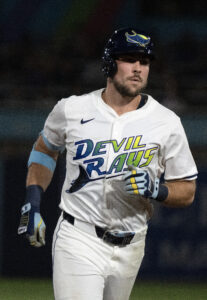
Photo courtesy of Kiyoshi Mio, Imagn Images.

Source: https://www.mlbtraderumors.com/2026/01/rays-acquire-ken-waldichuk-brett-wisely.html
 
Rays Finalize Coaching Staff

The Rays announced their full coaching staff on Tuesday, tabbing Will Bradley as an assistant hitting coach to round out the group. He had spent the 2025 season as a minor league hitting coordinator.

Bradley is a former college player and coach who moved into the professional ranks with the Angels in 2019. He began his Rays tenure as a Triple-A hitting coach before moving into the coordinator role. Bradley has also coached for the Australian national team. This is his first season on an MLB staff, and he’ll split the assistant hitting coach duties with Ozzie Timmons.

Tampa Bay announced last month that former All-Star Corey Dickerson would take over as first base coach. He replaces Michael Johns, who left the organization to become Blake Butera’s bench coach in Washington.

The majority of Kevin Cash’s staff is intact from the 2025 season. Bench coach Rodney Linares, pitching coach Kyle Snyder, hitting coach Chad Mottola, third base coach Brady Williams, assistant pitching coach Rick Knapp, bullpen coach Jorge Moncada, field coordinator Tomas Francisco, and process/development coach Kris Goodman are all back.

Source: https://www.mlbtraderumors.com/2026/01/rays-finalize-coaching-staff.html
 
Rays, Angels, Reds Agree To Three-Team Trade Involving Josh Lowe, Gavin Lux

While Kyle Tucker dominated baseball’s headlines, the Rays, Angels and Reds reportedly worked out a three-team trade. Outfielder Josh Lowe heads from Tampa Bay to the Angels. The Rays acquire utilityman Gavin Lux from Cincinnati and minor league pitcher Chris Clark from the Halos. The Reds get left-handed reliever Brock Burke from Los Angeles. The teams have not officially announced the deal.

It’s the second trade involving an everyday outfielder for the Angels this offseason. This time, the player is coming their way. Lowe will fill the outfield void left by Taylor Ward, who was shipped to Baltimore for Grayson Rodriguez. Tampa Bay entered the winter with a pair of Lowes, but the club will head into 2026 without either one. The versatile Lux can fill the void left by the Brandon Lowe deal. Cincinnati nets a veteran southpaw, while also getting off the $5.525MM contract Lux received in arbitration. Burke will make about half of that this season.

Lowe seemed like a fixture in Tampa Bay’s lineup after a massive 20/30 campaign in 2023. He posted a 135 wRC+ in his first season as a regular. Injuries would stifle his production the next two seasons. Oblique and hamstring issues delayed the start of his 2024 season. The oblique cost him time later that year, and then again at the beginning of this past season. He wasn’t productive when healthy this year, stumbling to a career-worst 79 wRC+ behind a .220/.283/.366 batting line. Lowe hit .139 with a 35.3% strikeout rate in his final month with the team.

USATSI_27023969-207x300.jpg


With Ward gone and Mike Trout penciled in at DH, the Angels had limited options in the outfield prior to the move. Lowe will now slot in alongside Jo Adell and Jorge Soler. The Rays shielded him from lefties for much of his time there, and with good reason. Lowe has a .504 OPS and a 33% strikeout rate in his limited work against same-handed pitching (288 plate appearances). He could be ticketed for regular at-bats given the lack of a platoon partner. The right-handed bench outfielder is currently Bryce Teodosio, a glove-first option. Trout only made 22 starts in the outfield last season, but that could change considering the alternatives.

A former first-round pick, Lowe is a plus runner who has slightly above-average bat speed. The aforementioned 20-30 season hints at his physical upside, but the durability and strikeout concerns kept him from establishing himself as a cornerstone player. He has only once reached 500 plate appearances in a season.

Lowe played a little bit of center field early in his career. The vast majority of his experience has come in right, and he has only logged seven innings up the middle over the past two seasons. He’d be stretched in center defensively, yet that’s also true of Trout and Adell. The Halos will probably need to live with rough up-the-middle defense from Lowe or Adell to get a better bat than Teodosio’s in the lineup, at least until 20-year-old center field prospect Nelson Rada arrives.

Tampa Bay and Lowe settled on a $2.6MM deal to avoid arbitration this year. It was his first trip through the process. He’s controlled for three seasons and still has a minor league option remaining, so the Halos could send him down without putting him on waivers. The Angels’ estimated payroll on RosterResource still sits at about $30MM below last year’s mark.

The Reds acquired Lux last offseason in a trade with the Dodgers. He delivered league-average results at the plate in his lone season in Cincinnati, hitting .269/.350/.374 with five homers over a career-high 503 plate appearances. Lux made most of his appearances in left field, while also spending time at second base and third base. He was also used frequently as a pinch hitter.

USATSI_26927644-300x200.jpg


Lux was one of Cincinnati’s more reliable on-base hitters, but he has never developed into much of a power threat. The former top prospect hasn’t hit more than 10 homers in any of his five-plus MLB seasons. Last winter’s change of scenery trade and move to Great American Ball Park didn’t really move the needle. The left-handed hitter has a solid offensive floor but probably doesn’t have much untapped upside as he enters his age-28 season.

The bigger drawback is that Lux has never settled into a clear positional home. He has moved around less because he’s an incredibly versatile and more due to his defensive struggles at various positions. His throwing accuracy has been an intermittent issue on the infield, even at second base. Defensive metrics haven’t looked favorably upon his work in the corner outfield.

The Rays had a clear gap at second base after the (first) Lowe trade. The internal choices were uninspiring, though Richie Palacios has some similarities as a left-handed hitter whose game is built around his on-base skills. Lux should step into a near-everyday role, with Tampa Bay’s typical platoon shenanigans likely capping his reps against left-handed pitching. He could also get some rotational corner outfield work, replacing Josh Lowe as a lefty bat in an outfield that remains without much certainty. Lux is a one-year addition who’ll reach free agency for the first time next winter.

The Angels claimed Burke, coincidentally a former Rays’ draftee, off waivers from the Rangers in August 2024. His one-and-a-half years with the club represented one of the better stretches of his big league career. Burke put together a 3.40 ERA across 90 appearances as an Angel. He pitched in a career-high 69 games last year. The 29-year-old is in his final year of arbitration and will hit free agency next season.

USATSI_27179558-300x200.jpg


Burke was able to tap into more velocity after joining the Angels. He sat 94-95 mph after transitioning from the rotation to the bullpen with the Rangers. In L.A., Burke bumped his heater to 96 mph. He also upped his slider usage with the club. Burke had a career-high 30.5% strikeout rate with the Angels in 2024. That number fell by more than 10 points in 2025, but he counteracted it with a career-best 53.3% ground-ball rate. Burke doesn’t have huge platoon splits and isn’t a situational specialist so much as a generally steady arm whom Terry Francona can use in the middle innings.

Cincinnati relied on Taylor Rogers as its primary lefty last season, until he was sent to the Cubs at the deadline. The Reds have added Burke and Caleb Ferguson to fill the role for 2026. They also tendered a contract to the out-of-options Sam Moll, so it seems they’ll begin the season with three veteran lefties in the relief corps.

Clark was a fifth-round pick by the Angels in 2023. He posted a 4.73 ERA across 28 minor league appearances this past season. Eric Longenhagen of FanGraphs praised Clark’s developing changeup and loose arm action heading into the 2025 campaign. The righty uses a sinker and sweeper as his two main pitches. A changeup would fit in nicely. The 24-year-old Clark topped out at Double-A last year. He made just one start at the level and will likely be back there to open the 2026 season.

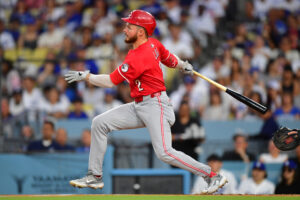
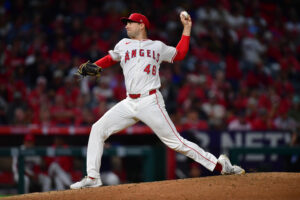
Jeff Passan of ESPN was first on the trade. Respective images via Chris Tilley, Gary A. Vasquez of Imagn Images.

Source: https://www.mlbtraderumors.com/2026...team-trade-involving-josh-lowe-gavin-lux.html
 
Rays View Gavin Lux As Full-Time Second Baseman

The Rays swapped Josh Lowe for Gavin Lux as part of last night’s three-team trade. President of baseball operations Erik Neander discussed the move with Marc Topkin of The Tampa Bay Times after it was finalized this morning.

Neander indicated the Rays were likely to narrow Lux’s defensive focus to his traditional second base position. The former top prospect worked in a utility role with Cincinnati last year, only starting 16 games at the keystone. He spent the majority of his defensive work in left field and started more games at designated hitter than any individual position.

“In our opinion, second base is his best position, and he plays it at his best when the entirety of his time is focused there,” Neander told Topkin. “The way things played out in Cincinnati last year, there was more opportunity in left field, more DH, more pinch-hit, a little bit of second base, but his work was not focused at second base. I think Gavin is someone that we can give him some clarity that, ‘Hey, second base, put your work in there, build your routines there, prepare for that, and basically that only.’ And I think that’s how we’re going to get the best out of him.”

Lux has played more second base than any other position in his career. He graded as a slightly above-average gloveman by both Defensive Runs Saved and Outs Above Average between 2019-22. Lux missed the entire ’23 season with a torn ACL. The Dodgers initially planned to move him up the defensive spectrum to shortstop when he returned. They scrapped that when he struggled with his throwing accuracy during Spring Training. Lux’s arm is less of an issue on the right side of the infield, but his overall defensive grades have dipped in the last two years.

The Rays apparently feel that last year’s metrics are attributable to the multi-position role. Committing to Lux as an everyday second baseman would have trickle-down effects for the rest of the roster. That probably locks Taylor Walls in at shortstop to open the season, allowing them to send Carson Williams back to Triple-A to work through contact concerns.

Richie Palacios had been the in-house favorite for second base playing time after the Brandon Lowe trade. He’s most adversely impacted by the acquisition of Lux, who has a similar skillset. They’re each left-handed bats whose games are built around strong on-base ability despite limited power. Palacios hit well in a tiny sample last year but was limited to 17 games by a pair of injuries — a broken right ring finger and a more significant knee sprain that cost him the bulk of the season.

Palacios still has a minor league option and could head to Triple-A for another season. His best path to MLB playing time now is probably in the corner outfield. Palacios has played nearly 500 innings as a left fielder over parts of four MLB campaigns. The Rays have a wide open outfield around Cedric Mullins, who is likely to be the everyday center fielder. Jake Fraley, Jonny DeLuca, Chandler Simpson, Justyn-Henry Malloy, Ryan Vilade and trade pickup Jacob Melton will also compete for playing time. Fraley, Palacios, Simpson and Melton are all left-handed hitters.

Source: https://www.mlbtraderumors.com/2026/01/rays-view-gavin-lux-as-full-time-second-baseman.html
 
Mets Claim Tsung-Che Cheng

The Mets claimed infielder Tsung-Che Cheng off waivers from the Rays, per announcements from both clubs. Tampa Bay designated Cheng for assignment last week. New York had open 40-man space and thus doesn’t need to make a corresponding roster move at this time.

Cheng, 24, made his big league debut with the Pirates in 2025 but went hitless in seven plate appearances. He didn’t fare all that well in Triple-A last year either, hitting just .207/.305/.267 with one homer, 12 doubles and three triples in 410 turns at the plate. However, Cheng is a plus runner who swiped 20 bags despite that paltry OBP, and he’s also a capable defender at shortstop, second base and third base. The 5’8″ lefty swinger also has an excellent eye at the plate, evidenced by a career 12.5% walk rate in the minors.

Pittsburgh designated Cheng for assignment last month. The Rays added him via waivers recently but designated him again upon acquiring lefty Ken Waldichuk. Cheng still has a minor league option year remaining, so he adds some fleet-footed depth that can play decent defense at multiple positions while providing quality plate discipline. There’s no guarantee he sticks with the Mets all the way through spring training, but for now he can provide some cover in the event of injuries or the trade of a young infielder such as Mark Vientos, Luisangel Acuña or Ronny Mauricio.

Source: https://www.mlbtraderumors.com/2026/01/mets-claim-tsung-che-chen-waivers-rays.html
 
Rays Looking To Trade For Catchers, Had Interest In J.T. Realmuto

The catching position has long been a weak link in Tampa Bay, and the Rays at least considered making a big move to solidify the position this winter. The Athletic’s Ken Rosenthal reports that Tampa showed some interest in signing J.T. Realmuto before Realmuto re-signed with the Phillies yesterday for three years and $45MM.

The Rays rarely make major forays into the free agent market, and it was widely assumed that Realmuto would eventually return to Philadelphia. Beyond these two points, however, it makes plenty of sense why the Rays would’ve checked in Realmuto, given both their needs behind the plate and the fact that Realmuto lingered on the open market until mid-January. Had the Phillies successfully signed Bo Bichette, for instance, Realmuto’s chances of a reunion might’ve gotten a lot slimmer, leaving the door open for the Rays (or another catcher-needy team) to swoop in with an offer.

Zach Eflin’s three-year, $40MM deal from the 2022-23 offseason represents the biggest contract the Rays have ever given to a free agent. This isn’t far under what Realmuto got from the Phillies, and if Philadelphia had dropped out of the Realmuto market altogether, there might’ve been opportunity for the Rays to make a similar offer, or perhaps even a matching average annual value on a two-year deal. In fact, MLB Trade Rumors projected a two-year, $30MM deal for Realmuto, but the Phils ended up adding a third year with the same $15MM average annual value.

Besides the Phillies, the Red Sox were the only other team known to have interest in Realmuto this winter. The Rangers were a speculative suitor, but reports indicated that the team’s limited budget wouldn’t allow for such a pursuit. Among other contenders or would-be contenders, the Giants, Reds, Pirates, or Marlins might’ve made sense, but there wasn’t any indication that any of these clubs (several of whom are also operating within reduced payrolls) made any push for Realmuto.

As per usual in Tampa Bay, there has been a lot of offseason roster shuffling, with some relatively pricier players moved out and other players brought in to fill holes in a somewhat less expensive manner. Steven Matz, Cedric Mullins, and Jake Fraley were all signed for a combined $25MM, so the Rays added three players for slightly more than the $22.5MM they would’ve owed Brandon Lowe and Pete Fairbanks had the two been retained. The end result is a payroll that will probably look pretty similar to last year — RosterResource estimates the Rays’ 2026 payroll at around $80.1MM, in comparison to their $78.9MM payroll from 2025.

Signing Realmuto might well have resulted in the Rays having to unload another prominent salary to make the numbers fit. Losing someone like Yandy Diaz to add Realmuto might not have been a welcome tradeoff for Tampa’s lineup, but since Diaz is entering the last guaranteed year of his contract, perhaps that’s a move the Rays would’ve been open to making making in order to finally shore up the catching position.

President of baseball operations Erik Neander said in November that the Rays were keeping an open mind about catchers, saying that “if we can find a way to be better at that position, we will, but those are two guys [Nick Fortes and Hunter Feduccia] we appreciate. If we roll into next year and that’s where we are — a lot of players, we’re counting on development from where they were, and that certainly applies to those two and [we] think that they can give us more than they did this year.”

Fortes and Feduccia are currently lined up as the Rays’ top two catchers, with Logan Driscoll and non-roster invite Blake Sabol as the only other backstops in the organization with any MLB experience. In a sign of how the position has been a revolving door for the Rays, Fortes and Feduccia have each been with the team just since July, as the duo were respectively acquired from the Marlins and Dodgers in deadline trades.

Fortes is a glove-first catcher who has hit only .224/.280/.345 over 1174 plate appearances in the majors. Feduccia also hasn’t hit in the Show but only in the limited sample of 119 PA, with 102 of those trips to the plate coming after the trade from Los Angeles. Formally a well-regarded prospect in the L.A. farm system, Feduccia has strong Triple-A numbers and might be something of an untapped resource as a hitter, though he is already 28 years old.

With Realmuto back in Philadelphia and Victor Caratini now signed by the Twins, the top two options on the free agent catching market quickly left the board in 24 hours’ time. Rather than sort through other free agents who might not represent clear upgrades, the Rays seem to prefer looking for trade help, as Rosenthal writes. The pickings are pretty slim on this front as well, but teams like the Royals, Cardinals, or Pirates could conceivably have enough available catching depth to match up with Tampa Bay as trade partners.

Source: https://www.mlbtraderumors.com/2026...or-catchers-had-interest-in-j-t-realmuto.html
 
Marlins Claim Osvaldo Bido

The Marlins have claimed right-hander Osvaldo Bido off waivers from the Rays, reports Daniel Alvarez Montes of El Extra Base. Tampa Bay designated Bido for assignment last week. Miami has an open spot on the 40-man roster after trading lefty Ryan Weathers to the Yankees, so a corresponding move won’t be necessary.

Bido turned 30 this past October. He spent seven seasons in the minors with the Pirates prior to making his debut as a 27-year-old rookie in 2023, and he’s spent the past two seasons pitching with the A’s, who signed him to a big league deal in the 2023-24 winter after Pittsburgh cut him loose. The wiry 6’3″, 175-pound righty has had an up-and-down run in the majors across the past three seasons, posting ugly numbers in 2023 and 2025 but logging 63 1/3 innings of 3.41 ERA ball with solid rate stats in 2024.

Overall, Bido has pitched 193 2/3 innings as a big leaguer. In that time, he carries a collective 5.07 earned run average. Metrics like SIERA (4.60) and FIP (4.67) are a bit kinder, but he’s pitched like a serviceable swingman/sixth starter for much of his time in the league. Bido averages 94.7 mph with both his four-seamer and sinker. His strikeout rate (20.9%) and walk rate (9.6%) are both worse than league average, but not by much. He’s an extreme fly-ball pitcher but hadn’t been especially prone to home runs until the 2025 season — though that was surely due to the Athletics’ temporary home at Sutter Health Park in West Sacramento playing like an absolute launching pad; Bido surrendered 13 home runs in 44 1/3 home innings but just six in 35 1/3 frames on the road.

Bido is out of minor league options, so he’ll need to either break camp with the Fish — presumably in a long relief role — or else clear waivers before he can be sent to Triple-A. Miami has been on the lookout for some rotation depth after trading not only Weathers but also righty Edward Cabrera. Bido provides some for the time being, but an out-of-options journeyman coming off a 5.87 ERA is far from a lock to stick on the roster.

At the moment, Miami’s rotation will include Sandy Alcantara, Eury Perez and (health-permitting) Braxton Garrett. There’s no shortage of other arms to compete for starting jobs. Former top prospect Max Meyer will be healthy after a long injury layoff. Janson Junk, like Bido, came to the Marlins as a journeyman long reliever last year but pitched well enough to carve out a spot on the big league roster in ’26 — whether as a starter or swingman. Righty Ryan Gusto, acquired last July for Jesus Sanchez, offers a similar skill set. Former top prospects Dax Fulton and Adam Mazur have missed time with injury but should be healthy and in the mix for innings. Most notably, top prospects Thomas White and Robby Snelling — two of MLB’s most highly regarded left-handers — are both on the cusp of the majors.

There’s plenty of talent in the mix for Miami’s rotation but also a lot of injury risk and uncertainty. It wouldn’t be a surprise to see them bring in a veteran starter, even if only on a non-roster invitation to spring training, in order to add some stability to the current group.

Source: https://www.mlbtraderumors.com/2026/01/marlins-claim-osvaldo-bido-waivers-rays.html
 
Rich Hill Not Planning To Play In 2026

Left-hander Rich Hill doesn’t want to use the word but it seems to be leaning towards retirement. Appearing on the Baseball Isn’t Boring podcast, Hill was asked by host Rob Bradford if he was retiring and said “I don’t have any plans on playing next year.” The situation is somewhat analogous to that of Joe Kelly, who announced on the same podcast last month that he didn’t want to use the word “retire” but wasn’t planning on playing anymore.

“I’m looking for open possibilities to stay in the game of baseball and be a contributory factor,” Hill continued. “I enjoy the work aspect of whatever it might be that’s next. I think that’s one thing that… why athletes get hired in other positions and other… outside of sports is because they are highly-driven people that want to succeed. And that’s something that I’m looking forward to.”

It’s not shocking that Hill is slowly wafting into the next stage of his career. Though he did pitch in the 2025 season, he was easily the oldest player in the league. He was 45 years old when he suited up for the Royals and will turn 46 in March. Though he has continued pitching to an age when most other players have called it quits long ago, he did so with some unconventional approaches. He waited until midseason to sign in 2024 in a deliberate attempt to be more fresh for a stretch run.

If this is indeed the end, it will wrap up one of the more unique arcs of a player in recent history. Hill was drafted by the Cubs way back in 2002 and made his major league debut in 2005. He didn’t find immediate success but had a really good season in 2007, posting a 3.92 earned run average over 32 starts.

But from there, he went into a really challenging period of his career. He struggled with results and health for many years, leading him to be bounced between the majors and minors and between various different organizations. From 2008 to 2014, he tossed a total of 153 innings split between the Cubs, Baltimore, Boston, Cleveland, the Angels and Yankees. He posted a 5.41 ERA over that stretch.

2015 would turn out to be an incredible comeback season. He started the year on a minor league deal with the Nationals. He opted out of that contract in June and signed with the Long Island Ducks of the independent Atlantic League. He made just two starts for that club but struck out 21 opponents in 11 innings. That was enough to get him back into affiliated baseball via a minor league deal with the Red Sox.

Boston called him up in September and he made four starts as the season was winding down. In those, he logged 29 innings with a 1.55 ERA. He had a mammoth 34% strikeout rate, a tiny 4.7% walk rate and a strong 48.4% ground ball rate. That was a tiny sample size but the Athletics made a bet on it, signing Hill to a one-year, $6MM deal for 2016. That wager paid off handsomely, with Hill giving the A’s 14 starts with a 2.25 ERA.

At that year’s deadline, he was traded to the Dodgers alongside Josh Reddick, with the A’s getting Frankie Montas, Grant Holmes, and Jharel Cotton in return. Hill gave the Dodgers six starts with an ERA of 1.83 and then three postseason starts with a 3.46 ERA.

The Dodgers were happy enough with that showing to bring Hill back via a three-year, $48MM contract. That was a pretty staggering deal for a 37-year-old who was not too far removed from being in indy ball but it worked out well. He logged 327 innings over those three seasons with a 3.30 ERA, plus 37 postseason innings with a 2.43 ERA.

After that deal ran its course, Hill went into his 40s and mercenary mode. He signed a series of one-year deal with the Twins, Rays, Red Sox and Pirates. In 2023, he seemed to wear down as the season went along, not surprising for a 43-year-old. His 4.76 ERA with Pittsburgh was still respectable but he collapsed after a deadline deal to the Padres, posting an 8.23 ERA after the swap.

As mentioned, he then tried to think outside the box to continue as an effective big league pitcher. He planned to intentionally sign at midseason in 2024 in order to spend more time with his family and also save his bullets for the second half and postseason. He stayed unsigned until inking a minor league deal with the Red Sox in August. He did get called up but only for four relief appearances before being released. In 2025, he signed a minor league deal with the Royals in May. He got called up in July but was designated for assignment after just two starts.

Given the unusual shape of his career and his willingness to buck conventions, it’s possible he’ll change his mind and find his way back to the mound. But if Hill doesn’t make it back to the majors, he will finish with 1,418 innings tossed over 388 games for 14 different clubs. In that time, he posted a 4.02 ERA but will likely be best remembered for the 2015-2021 run which saw him post a 3.15 ERA in his late 30s and early 40s. Baseball Reference pegs his career earnings over $75MM, most of that coming to Hill in his late-career surge. We at MLB Trade Rumors salute him on a fine career, which may or may not be done, and wish him the best on whatever is next.

Photo courtesy of Peter Aiken, Imagn Images

Source: https://www.mlbtraderumors.com/2026/01/rich-hill-not-planning-to-play-in-2026.html
 
Latest On Rays Stadium Plans

The Rays continue their efforts to find a workable plan for a new stadium in the Tampa Bay area. They took a step in that direction on Tuesday, as the board of trustees at Hillsborough College voted to approve a memorandum of understanding with the team (link via Nina Moske, Colleen Wright and Lucy Marques of The Tampa Bay Times). It’s a non-binding agreement between the Rays and the college as the team pursues a stadium/mixed-use development plan at its Dale Mabry campus.

The team’s lease at Tropicana Field runs through 2028. They’re hopeful of having a new stadium built for the start of the ’29 season. That doesn’t leave a whole lot of time to work out funding agreements with the city and county before getting construction underway. The team’s deal on Tuesday was with the college to zero in on a potential stadium site. They have not worked out any kind of public funding deals.

The Rays had a 2024 agreement on a stadium that would have been in St. Petersburg, which is located in Pinellas County. The deal collapsed after hurricane damage held up county approval of certain bonds, which led the Rays to argue they needed more money to cover cost overruns associated with the delay. Talks between the team and city/county officials became acrimonious enough that the Rays pivoted to working with Hillsborough County officials and the City of Tampa.

An inability to work out a stadium deal was seemingly the driving force in Stu Sternberg’s decision to sell his majority share in the franchise last year. Patrick Zalupski is now leading ownership and taking another crack at working out a deal within Tampa itself. City and county officials have given mixed signals on whether they’ll approve public money.

Hillsborough County Commissioner Ken Hagan, a proponent of a deal in Tampa, suggested this afternoon that he believes the team would pursue opportunities in Orlando if they don’t make sufficient progress on the Dale Mabry site (link via Nicolas Villamil of The Tampa Bay Times). There has been growing support in Orlando for a team, either via relocation or expansion, but MLB commissioner Rob Manfred and Rays’ officials have maintained they’re focused on the Tampa area at the moment.

Source: https://www.mlbtraderumors.com/2026/01/latest-on-rays-stadium-plans.html
 
Finding The Rays’ Closer Replacement

There was a time in the not-so-distant past that Tampa Bay shuffled through closers every season. Manager Kevin Cash took over in 2015. Over the next eight seasons, the club had seven different saves leaders. Alex Colome was the only reliever to pace the team in back-to-back seasons (2016 and 2017). That changed in 2023, when Pete Fairbanks took over as the full-time closer.

Fairbanks racked up 75 saves over the past three seasons. He’s been Cash’s go-to stopper when healthy. The right-hander ranks third in franchise history with 90 saves. He would have almost certainly passed Colome (95) and Roberto Hernandez (101) had he remained with the organization for another year. Instead, Tampa Bay declined Fairbanks’ $11MM option and allowed him to hit free agency. He signed a one-year, $13MM deal with the Marlins on Christmas Eve.

The Rays will now need to fill the void left by Fairbanks. Considering the organization didn’t want to pay a reasonable price to keep him, the new closer will likely be an internal choice. Tampa Bay has a long history of manufacturing solid relievers, with Fairbanks himself being part of that lineage. These are the potential candidates…

Edwin Uceta

Uceta was the primary high-leverage righty behind Fairbanks last season. He led the bullpen with 76 innings and tied for the team lead with 21 holds. Uceta only had one save in 2025, but he previously served as the closer when Fairbanks missed time in 2024. The right-hander recorded the first five saves of his MLB career that season.

The closer-caliber stuff is there for Uceta. His fastball, changeup, and cutter all had whiff rates above 31% last season. He has a 15.5% swinging-strike rate for his career. The main issue is the long ball. Uceta gave up 11 home runs in 2025, which ranked in the top 10 among relievers. He had a healthy 34.4% fly ball rate and a massive 29.5% pulled air contact rate. A propensity to allow fly balls to the pull side is a scary trait for a reliever called on to protect small leads.

Griffin Jax

Acquired at the trade deadline for Taj Bradley, Jax was set to be the closer in waiting. He had been the setup man in Minnesota behind Jhoan Duran, though he had forced somewhat of a timeshare in 2024. Jax earned a career-high 10 saves that season. He opened the year as the closer with Duran dealing with an oblique injury, and was still called upon to finish games even when the incumbent returned. The 2025 campaign didn’t begin as smoothly, as Jax had a 4.50 ERA when he was dealt to Tampa Bay, but a 2.08 SIERA and a 1.79 xFIP suggested he had been unlucky.

The change of scenery didn’t help Jax. He allowed seven earned runs in his first 7 1/3 innings with Tampa Bay. Jax allowed three home runs in that stretch, including a game-losing three-run blast to Cal Raleigh in early August. He closed the season with 10 scoreless appearances, though they mostly came in low-leverage spots. Jax also served as an opener in two games down the stretch.

Garrett Cleavinger (honorable mention)

FanGraphs’ bullpen depth chart lists each of Uceta, Jax, and Cleavinger as closers. It’s fair to include Cleavinger, given his high-leverage work last season. He matched Uceta with 21 holds as the preferred lefty setup man. However, Cleavinger’s candidacy has a clear flaw. He’s the only left-handed reliever on the 40-man roster. There’s virtually no chance he’ll get the closer job without another lefty in the bullpen.

Bryan Baker

Baker had the makings of the unheralded reliever that Tampa Bay turns into a shutdown guy. He spiked a 32.5% strikeout rate through three months last season with the Orioles. The Rays traded for him in early July. Baker made a significant pitch mix tweak in 2025, doubling his changeup usage and prioritizing it ahead of his slider. The changeup was Baker’s best whiff pitch by far. It also held opponents to a measly .128 batting average.

While the jump in strikeouts was nice, Baker still got hit incredibly hard. He gave up barrels at a 12.6% clip, which ranked in the 1st percentile. His 48.3% hard-hit rate put him in the 3rd percentile. Unless Baker can find a way to miss bats and limit damage, he’s likely ticketed for the middle innings.

Hunter Bigge

While he might not break camp with the team, Bigge looms as the potential closer of the future. Tampa Bay acquired him at the 2024 trade deadline in the deal that sent Isaac Paredes to the Cubs. Bigge had dominated at Triple-A that season, earning his first big-league promotion. He pitched well in his brief time in Chicago, then continued to excel with the Rays.

Bigge’s 2025 season was wrecked by two injuries. He went down with a lat strain in early May. In June, he was hit in the face by a 105 mph foul ball. Bigge suffered multiple facial fractures due to the incident. He did not make it back on the mound.

Bigge has the premium velocity and putaway pitch (a wipeout slider) to succeed as a closer. His recovery timeline isn’t clear, but he should be available to contribute on the big-league club at some point. Considering the long layoff, Bigge might be more of a 2027 closer candidate.

Photo courtesy of Matt Marton, Imagn Images

Source: https://www.mlbtraderumors.com/2026/01/finding-the-rays-closer-replacement.html
 
Rays, Cam Booser Agree To Minor League Deal

The Rays have agreed to a minor league contract with left-handed reliever Cam Booser, per the team transaction log at MLB.com. He’s a client of Northwest Sports Management. The log doesn’t specify as much, but MLBTR has confirmed that Booser will be in major league camp with the Rays as a non-roster invitee.

Booser, 33, spent the 2025 campaign with the White Sox organization, tossing 31 innings in the majors and another 14 2/3 frames in Triple-A. That was his second season with big league work, adding onto the 42 2/3 frames he logged with Boston in 2024. In 73 2/3 innings between the BoSox and ChiSox, Booser carries a 4.28 earned run average, a 23.9% strikeout rate and a 10.7% walk rate. He’s an extreme fly-ball pitcher, inducing grounders at just a 31% clip.

Booser sits 95.5 mph with his four-seamer and complements the pitch with a cutter averaging 88 mph and a slider that sits 81.7 mph. His solid strikeout rate is supported by a 13% swinging-strike rate in the majors, and his 89.5 mph average exit velocity, 10.4% barrel rate and 38.9% hard-hit rate are all at or close to the league average among relievers. Booser has never struggled to miss bats much in the minors, but command troubles have been present throughout his professional career.

After trading Mason Montgomery in the three-team swap that sent Brandon Lowe to Pittsburgh and brought Jacob Melton from Houston to Tampa Bay, the Rays’ only lefty in the bullpen is Garrett Cleavinger. They don’t have any left-handed relievers on the 40-man roster in the minors, though any of Joe Rock, Ian Seymour or DFA pickup Ken Waldichuk could conceivably work out in relief if the team prefers to explore a role change. All three are on the 40-man roster.

The Rays haven’t been especially active in bringing players aboard on non-roster deals with invitations to spring training, so at the moment Booser is one of the more experienced NRIs who’ll be in camp with Tampa Bay. That can always change in the weeks ahead, of course, but barring the addition of another lefty or two, the hard-throwing Booser probably has a chance to force his way into the Opening Day picture with a big spring showing.

Source: https://www.mlbtraderumors.com/2026/01/rays-sign-cam-booser-reilever-minors.html
 
Lot of moving pieces here for Tampa Bay. The closer situation is probably the most interesting storyline heading into spring training.

Uceta seems like the logical choice given his experience filling in for Fairbanks before, but those home run numbers are concerning. You don't want your closer giving up fly balls to the pull side when you're protecting a one-run lead in the ninth. Jax had that rough stretch after the trade but finished strong - maybe the Rays' pitching staff can unlock something there. They've had success with reclamation projects before.

Booser signing makes sense given how thin they are on lefties after the Montgomery trade. Cleavinger can't be the only left-handed option out of the pen. Not sure Booser is the answer long-term with those walk rates, but he throws hard and could carve out a role if he has a solid spring.

The stadium situation continues to be exhausting. Three years to get a new park built by 2029 seems incredibly tight, especially when they haven't even worked out public funding yet. The Orlando leverage play is interesting - not sure how serious that threat actually is, but it might light a fire under Hillsborough County officials.

As for the other moves, Bido is a low-risk depth piece for Miami. Rich Hill potentially hanging it up is the end of an era. That 2015-2021 stretch was remarkable for a guy who was pitching in independent ball. One of the better second-act stories in recent memory.
 
David Robertson Announces Retirement

Veteran reliever David Robertson has decided to hang up his spikes. He announced the decision on his personal social media pages, issuing the following statement:

“I’ve decided it’s time for me to hang up my spikes and retire from the game I’ve loved for as long as I can remember. Baseball has given me more than I ever dreamed possible over the last 19 seasons. From winning a World Series, to pitching in an All-Star game, to representing the United States and bringing home a World Baseball Classic Gold and Olympic silver. I’ve had the privilege of playing alongside amazing teammates, learning from outstanding coaches, and being welcomed into organizations that felt like family. To the trainers, clubhouse staff, front offices, and everyone behind the scenes, thank you for all that you do. And to the fans who supported me, thank you, your passion fueled me every single day.

Most importantly, thank you to my wife and children. Your love, sacrifice, patience, and dedication made this career possible. As I step away from the game, I’m excited to be home with my family, to focus on our farms, and to continue growing High Socks for Hope. Helping families rebuild after disaster has been one of the most rewarding parts of my life outside baseball.

Saying goodbye isn’t easy, but I do so with deep gratitude for every opportunity, challenge, and memory. I’ll forever be thankful for the game and for everyone who made this journey extraordinary.”

Robertson retires after a two-decade run in professional baseball. He signed an overslot deal as a 17th-round pick of the Yankees in 2006. He was in the big leagues two years later. He began his career in middle relief but impressed with a 3.30 earned run average across 45 appearances in his first full season. Robertson added 5 1/3 scoreless innings and earned a pair of wins as the Yankees went on to win the World Series in 2009.

By the following season, the righty was a fixture in the Yankee bullpen in front of Mariano Rivera. He was exceptionally durable and consistently effective. Robertson reeled off a streak of 10 straight sub-4.00 ERA seasons between 2009-18. He surpassed 60 innings in the final nine of those years.

His most accomplished statistical season came in 2011, when he fired 66 2/3 frames with a career-low 1.08 ERA. Robertson picked up 34 holds against three blown leads. He earned his first and, somewhat surprisingly, only All-Star selection while receiving down-ballot Cy Young and MVP votes. He recorded a personal-best 100 strikeouts. He trailed only Craig Kimbrel and Tyler Clippard among relievers in punchouts, while Atlanta’s Eric O’Flaherty was the only pitcher with a lower earned run average.

Robertson remained in a setup role until Rivera ended his Hall of Fame career after the 2013 season. Robertson, an impending free agent, stepped seamlessly into the closer role. He recorded 39 saves with a 3.08 ERA in his walk year. He hit free agency at age 30 and rejected a qualifying offer before landing a four-year, $46MM deal from the White Sox.

USATSI_10361213-200x300.jpg


He held up his end of the bargain, topping 30 saves in his two full seasons in Chicago. The Sox weren’t good overall, however, and they embarked on a teardown by 2017. They shipped Robertson back to the Bronx alongside Todd Frazier and Tommy Kahnle. Robertson played out the final season and a half of the contract and helped New York back to the postseason in both years. He was part of the 2017 national team that won the World Baseball Classic, tossing a scoreless inning to close an 8-0 win over Puerto Rico in the final.

A return trip to free agency was never going to be as lucrative as he entered his age-34 season. He signed a two-year, $23MM deal with the Phillies. That was a precursor to the first real setback of his entire career. Robertson’s elbow gave out seven appearances into his first season in Philadelphia. He missed most of the year rehabbing before it was revealed that he needed Tommy John surgery. Robertson lost all of 2020 and most of ’21 before making a comeback with the U.S. National Team at the Tokyo Olympics (which were held in ’21 because of the pandemic).

Robertson carved out an impressive final act after the surgery. He bounced around as a setup man, mostly on contending clubs. Robertson made the playoffs with the Rays in ’21 and returned to the World Series the following year. A $3.5MM free agent deal with the Cubs led to a midseason trade back to Philadelphia, and he wound up tossing 7 2/3 innings of one-run ball in October for the pennant winning Phils. Robertson split the ’23 season between the Mets and Marlins — Miami was a deadline buyer who snuck into the playoffs — and remained an excellent leverage arm with the Rangers in 2024. He worked a career-high 72 innings of 3.00 ERA ball with 99 punchouts for Texas in what would be his final full season in the big leagues.

Despite his continued strong performance, Robertson didn’t find the contract he was seeking last offseason. He waited until July before signing a one-year deal for his third stint with the Phillies. Robertson made 20 regular season appearances and one final playoff outing in the Division Series loss to the Dodgers.

Robertson finishes his playing days with a 2.93 ERA in just shy of 900 regular season innings. Only Kenley Jansen has pitched in more games than his 881 going back to his debut. Robertson recorded nearly 1200 strikeouts. He saved 179 games and recorded 206 holds, ranking top 20 in both stats over his career. He had a 2.88 ERA in his first 10-year peak and came back from elbow surgery to add 230 2/3 frames of 3.00 ERA ball with a 31% strikeout rate from ages 36-40.

It’s a remarkable run of consistency at a position that is generally viewed as the sport’s most volatile. Robertson only had four seasons in which he allowed more than four earned runs per nine: his first and last years and the ’19 and ’21 campaigns that were shortened by the one significant injury he incurred. That’s all before considering his postseason résumé — 47 2/3 innings of 3.47 ERA ball in 10 different trips to October.

Robertson spent the majority of his career in the Bronx. He’ll be best remembered as a Yankee but appeared for eight clubs overall. Although he’s not going to get much consideration for induction into Cooperstown, he’s a lock to appear on the Hall of Fame ballot five years from now and could see his name checked by a few voters who want to honor his longevity and reliability. MLBTR congratulates him on an excellent career and sends our best wishes in whatever comes next.

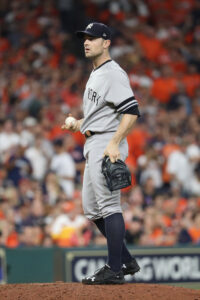
Image courtesy of Thomas Shea, USA Today Sports.

Source: https://www.mlbtraderumors.com/2026/01/david-robertson-announces-retirement.html
 
Mariners Acquire Brendan Donovan

The Mariners, Rays and Cardinals officially announced a three-team deal that sends infielder/outfielder Brendan Donovan to Seattle. The full breakdown is as follows:

  • The Mariners send infielder Ben Williamson to the Rays, as well as prospects Jurrangelo Cijntje and Tai Peete and a competitive balance round B pick (#68 overall) to the Cardinals, receiving infielder/outfielder Brendan Donovan from the Cardinals.
  • The Cardinals send infielder/outfielder Brendan Donovan to the Mariners, getting prospects Jurrangelo Cijntje and Tai Peete plus a competitive balance round B pick (#68 overall) from the Mariners, as well as receiving outfield prospect Colton Ledbetter and a competitive balance round B pick (#72 overall) from the Rays.
  • The Rays send outfield prospect Colton Ledbetter and a competitive balance round B pick (#72 overall) to the Cardinals, receiving infielder Ben Williamson from the Mariners.

A Donovan trade has felt inevitable for quite a while. The Cardinals have been leaning harder into a rebuild this winter. They tried to kick off a reset last offseason but struggled to move their veteran players with no-trade clauses and ended up mostly standing pat. With president of baseball operations John Mozeliak ceding the reins to new president Chaim Bloom after the 2025 campaign, it became clear that the club would push harder to focus on the future.

Nolan Arenado, Sonny Gray and Willson Contreras all had no-trade clauses in their contracts and seemed reluctant to approve deals in the 2024-25 offseason. As last year was winding down, they all publicly expressed a greater openness to playing for new teams in 2026. That has now come to fruition for all three. Gray and Contreras were both traded to the Red Sox, while Arenado landed with the Diamondbacks.

USATSI_26829980-300x200.jpg


Donovan’s situation was slightly different. Those other three guys were all veterans making eight-figure salaries. Moving them out of St. Louis was partially about slashing the payroll and also about opening up opportunities for younger players as part of the rebuild. Donovan, on the other hand, is still in his arbitration seasons. He will make a relatively modest $5.8MM in 2026 and would be due a raise in 2027.

It wouldn’t be necessary to trade Donovan for financial reasons at that price. But with the Cards expecting their rebuild to last a few years, it made sense to make Donovan available since he’s just two years away from free agency. An extension was another possibility but Donovan is now 29, so he’ll be going into his age-31 season in his first free agent year, and it’s unclear if the Cards will be competitive by then.

Donovan was a case where the St. Louis front office wouldn’t have to worry about the contract and could focus on simply bringing back as much talent as possible. With his modest salary and inability to block trades, the Cards could scour the league to see what teams were willing to pay in terms of prospect capital. Since Donovan can play all over the diamond, with experience at all four infield positions and the outfield corners, almost any contender could fit him onto the roster.

It’s not just defensive versatility that Donovan brings to the table. In his four big league seasons, he has been remarkably consistent with a contact-based approach at the plate. His strikeout rate has been in the 12 to 15% range in each season of his career, during a time when the league average is usually around 22% or so. He has also drawn walks at a rate right around league par. He doesn’t have huge power but has hit at least 10 home runs in each of the past three seasons.

Put it all together and Donovan has a career .282/.361/.411 slash line. That translates to a 119 wRC+, indicating he has been 19% better than league average at the plate overall. Each of his four seasons has ended with a wRC+ between 115 and 127. A consistently above average hitter with an affordable salary who can capably play many different positions made Donovan a good fit for many teams and he reportedly received interest from about half the clubs in the league. He underwent sports hernia surgery in October but that doesn’t seem to have put a damper on his market and there has been no reporting to suggest he won’t be healthy for spring training.

The Mariners certainly stood out as one of the best fits, if not the very best. They went into the winter with some question marks in various positions but also potential internal solutions. They finished 2025 with Jorge Polanco as their regular second baseman and Eugenio Suárez at third. Both became free agents and have since agreed to deals with different clubs, Polanco with the Mets and Suárez the Reds.

Seattle had interest in bringing both back but it also would have been a bit awkward to sign either. Putting Polanco back at second would have blocked Cole Young. He debuted in 2025 and didn’t have immediate success, with a .211/.302/.305 line on the year. However, he may have been held back by a .247 batting average on balls in play, as his 10.9% walk rate and 18.3% strikeout rate were both quite good. The M’s presumably don’t want to give up on him just based on that initial exposure to the big leagues. Middle infield prospect Michael Arroyo is also not far off, having reached Double-A in 2025. Ryan Bliss showed some promise before he spent most of 2025 on the injured list.

At third base, the Mariners already gave some big league time to Williamson last year. He didn’t hit much but got really strong reviews for his glovework, getting credited with eight Defensive Runs Saved in 703 innings. That gave them a glove-first floor at the position.

Meanwhile, they have Colt Emerson lurking. A consensus top 20 prospect coming into 2026, he crushed High-A and Double-A in 2025, getting a late promotion to Triple-A for six games. He could be the long-term shortstop but his glovework is considered a bit behind his bat. With J.P. Crawford signed through 2026, Emerson could theoretically cover third in 2026 and then move over to short for 2027. However, he is only 20 years old and has barely reached Triple-A, so there’s no guarantee of that scenario playing out as scripted.

There’s also a bit of uncertainty in right field, where the Mariners have a cluster of guys including Víctor Robles, Dominic Canzone, Luke Raley and Rob Refsnyder. Robles was injured for most of 2025 and struggled when on the field. The other three guys have mostly found success in platoon roles, Canzone and Raley from the left side and Refsnyder the right.

Take all those situations into account and Donovan’s appeal becomes clear. His multi-positional abilities will allow the club to bounce him around depending on who else is healthy and producing. Perhaps he will start out projected at second base, since that is the position he has played most in his career. But if Young breaks out or Bliss bounces back, Donovan can be moved to third. With Williamson now leaving for Tampa, Donovan could cover the hot corner until Emerson charges forth and takes that spot. If second and third are both taken over by younger guys, then Donovan could see more time in the outfield. As injuries pop up throughout the year, the picture will change and Donovan can shift.

Donovan’s contact approach was likely also a part of the appeal. The Mariners had one of the highest strikeout rates in the majors in both 2023 and 2024, with a 25.9% rate in the former and a 26.8% clip in the latter. They made a concerted effort to get that down in 2025, dropping it to 23.3%, but that was still one of the seven highest rates out of the 30 clubs in the majors.

jurrangelo-cijntje-mariners-prospect-300x195.jpg


To get Donovan, the Mariners are dipping into their strong farm system but aren’t giving up any of their top guys. Cijntje, 23 in May, was Seattle’s first-round pick in 2024. The M’s took him 15th overall and signed him with a $4.8809MM bonus.

One of the most unique prospects, Cijntje primarily throws with his right arm but also throws with his left. He can get his fastball to the upper 90s with both arms but his lefty velocity is a tad lower. Basically, he has been working as a traditional righty starter but then occasionally switching to the left side when facing a lefty hitter. The potential outcomes with such a prospect are quite wide, as it’s never really been seen before. Pat Venditte pitched with both arms and was able to carve out a big league career from 2015 to 2020, but as a journeyman reliever.

Cijntje, on the other hand, seems capable of being a big league starter with his right arm. He posted a 3.99 ERA in 108 1/3 minor league innings last year. Baseball America recently ranked him the #7 prospect in a strong Seattle system.

Whether he would still mix in some lefty work in the long run is undetermined. Daniel Kramer of MLB.com reported yesterday that Cijntje would be mostly focusing on his work as a righty in spring training. He was going to still throw as a lefty in some bullpen work but not in games.

The Cardinals will presumably shed some light on what they have in mind for Cijntje, though the team announced him as a right-handed pitcher in their press release. Whether it’s as a switch-pitcher or a traditional righty, he will give them some extra pitching depth, which has been their main target this winter. They also added Richard Fitts and Brandon Clarke in the Gray trade, Hunter Dobbins, Yhoiker Fajardo and Blake Aita in the Contreras deal and then Jack Martinez in the Arenado swap.

Some of those pitchers are immediate candidates for big league work but that shouldn’t be the case with Cijntje. He hasn’t yet reached Triple-A and has only seven starts at the Double-A level. If the switch-pitching experiment were to continue, he should arguably require more development time than a standard prospect, since it would be such an unprecedented path that there’s no map. He won’t be Rule 5 eligible until December of 2027, so the Cards could be very patient if they wanted, especially with the major league club not being competitive in the short term.

Peete, 20, was selected 30th overall in the 2023 draft and signed via a $2.5MM bonus. He has huge tools but also big question marks. In 2025, he got into 125 High-A games. He hit 19 home runs and stole 25 bases but also struck out in 30.6% of his plate appearances. Initially a shortstop who also dabbled at second and third, the Mariners moved him to the outfield last year, mostly in center but also with a decent amount of time in left.

It’s a long-term play with wide error bars but BA recently gave Peete the #10 spot in the Seattle system. The fact that he’s already striking out at such a high rate is worrisome, as hitters generally strike out more as they climb the minor league ladder and face tougher pitching. But his outfield defense is considered strong even though he just moved there, and there’s power in the bat. The ingredients are potentially there but St. Louis will have to be patient since he’s not close to the majors and needs some refinement.

Colton_Ledbetter_Rays_vertical-209x300.jpg


Ledbetter, 24, was a second-round pick of the Rays in 2023. He profiles as a guy who can do a lot of things well but without a standout tool. He played 123 Double-A games last year, hitting seven home runs and stealing 37 bases while playing all three outfield spots. His 9.5% walk rate and 23.9% strikeout rate were both close to normal.

For the Rays, they are giving up Ledbetter and a draft pick but presumably feel Williamson is a worthwhile near-term upgrade to the big league squad, whereas Ledbetter and the pick wouldn’t be helping the team for a few years.

As mentioned, Williamson profiles as a glove-first third baseman, but he also has minor league experience at the middle infield spots. The Rays have one of the best young third basemen in Junior Caminero, who just wrapped up a 45-homer season in his age-21 campaign. His defense wasn’t especially well regarded, so Williamson could perhaps sub in for him late in games for better glovework.

The Rays traded away Brandon Lowe but then replaced him at second base by acquiring Gavin Lux. Hitting from the left side, Lux needs a platoon partner, as he has a career .269/.344/.406 line against righties but .198/.277/.260 against lefties. Williamson is a righty and hit better against southpaws in his debut last year, so perhaps he can help the Rays shield Lux. Williamson also has options and could be sent to the minors if complementing Lux and Caminero doesn’t get him enough playing time.

Ultimately, this deal is about the Mariners making a big upgrade to their team. They just went to the ALCS in 2025 and almost made it to the World Series, before a heartbreaking loss in game seven. Donovan adds to the 2026 and 2027 teams while also giving the club the flexibility to find roles for some of their younger guys who could be long-term pieces. He doesn’t break the bank financially and didn’t require the club to part with any of its best prospects.

The Cardinals cash in a guy who wasn’t going to be much use to them during their rebuild. They’ve added some more young talent to the system and also cleared more playing time for players who could be part of the next competitive cycle, including JJ Wetherholt, Thomas Saggese, Nolan Gorman, Joshua Baez and others. They also picked up two reasonably high draft picks to add a couple more prospects in July. That’ll likely add around $2.5MM to their bonus pool as well.

Further trades are theoretically possible. Lefty reliever JoJo Romero is an impending free agent and a natural trade candidate. He has stayed with the Cardinals thus far, so perhaps they haven’t been bowled over by the offers, which could lead to him staying in St. Louis until the summer deadline. Lars Nootbaar is two years from free agency, like Donovan, but he may begin the season on the injured list due to heel surgery. He has been in some rumors but the Cards may hold him until he shows he’s healthy, then make him available in the summer as well.

Though a Donovan trade has been discussed all winter, it took most of the offseason to come together. Presumably, that’s due to the other participants in the game of musical chairs. The offseason began with free agency offering other infielders, including Suárez and Polanco but also Bo Bichette, Alex Bregman, Luis Arráez and more.

The chairs started filling up in recent weeks. The Cubs reached an agreement with Bregman in mid-January. Not long after, Bichette landed with the Mets. The Giants were reportedly making a strong push for guys like Donovan but also Nico Hoerner of the Cubs and CJ Abrams of the Nationals. Instead, they pivoted to a one-year deal with Arráez this weekend. Suárez lingered unsigned until reaching an agreement with the Reds in recent days.

After the Mariners, the Red Sox were one of the clubs most frequently connected to Donovan. They seem likely to let Marcelo Mayer replace Bregman at third but don’t have a great solution at second base. Reportedly, Donovan wasn’t considered a perfect fit because the lineup is already heavy on lefties, but they now have one less option available. Rumors have been swirling about Isaac Paredes but it’s unclear if the Astros have any willingness to deal him.

Katie Woo and Chad Jennings of The Athletic first reported that the Mariners were close to getting Donovan in what was likely a three-team trade. Jeff Passan of ESPN reported that the Rays were the third team. Bob Nightengale of USA Today reported that Tampa was expected to get Williamson. Joel Sherman of The New York Post first reported on Cijntje going to the Cards. Adam Jude and Ryan Divish of The Seattle Times first reported Peete going to the Cards. Nightengale first had Tampa sending out a prospect and a comp B pick. Sherman first reported Ledbetter’s inclusion. Nightengale then specified the full breakdown. Passan reported that the agreement was in place and that Seattle was sending the #68 pick to St. Louis.

Photos courtesy of Eakin Howard, Jeff Curry, Kevin Jairaj, Kim Klement Neitzel, Imagn Images

Source: https://www.mlbtraderumors.com/2026/02/mariners-close-to-acquiring-brendan-donovan.html
 
Rays Designate Ken Waldichuk For Assignment

The Rays announced they’ve designated left-hander Ken Waldichuk for assignment. That’s the corresponding 40-man roster move for infielder Ben Williamson, acquired from Seattle in tonight’s three-team trade that sent All-Star utility player Brendan Donovan to the Mariners.

Tampa Bay picked up Waldichuk in a DFA trade with Atlanta a few weeks ago. They’re his third organization of the offseason. The Braves had claimed him off waivers from the A’s, who had themselves designated him for assignment after trading for Jeff McNeil. The 28-year-old finds himself in DFA limbo for the third time since December.

A fifth-round pick of the Yankees in 2019, Waldichuk developed into a quality pitching prospect. The A’s acquired him at the ’22 deadline in the Frankie Montas trade. That was one of the more significant trades that summer but didn’t work all that well for either team. Montas struggled before undergoing shoulder surgery and wound up pitching nine times with a 6.15 ERA in pinstripes. The A’s end of the deal has panned out only slightly better. Waldichuk and Luis Medina have pitched poorly and battled injuries. JP Sears turned out to be the best piece of the return as a durable fifth starter who was traded to the Padres last summer as a secondary part of the Mason Miller deal.

Waldichuk started 25 of 31 MLB appearances between 2022-23. He gave up a 5.35 ERA with slightly worse than average strikeout and walk numbers. He hasn’t thrown a major league pitch in two years, as he underwent Tommy John surgery in May ’24 that kept him out until last July. Waldichuk spent the second half of the season in Triple-A, where he was tagged for 52 runs in 51 innings in a brutal environment for pitchers. A fastball that sat around 94 miles per hour in his rookie year was down to 91.6 MPH last year in the minors.

Atlanta and Tampa Bay nevertheless took fliers on Waldichuk to see if he’ll recapture some of his early-career promise as he gets further removed from injury. He still has a pair of minor league options and is signed for barely more than the league minimum after agreeing to an $825K contract in November. Waldichuk is under arbitration control for at least four seasons.

Source: https://www.mlbtraderumors.com/2026/02/rays-designate-ken-waldichuk-for-assignment.html
 
Avisail Garcia Announces Retirement

Avisail Garcia announced his retirement on Monday afternoon. That concludes a career which spanned parts of 13 MLB seasons and included an All-Star appearance in 2017.

“Today I formally announce the end of my career in Major League Baseball after 12 seasons of dedication and hard work. Thank you to God for the blessing of fulfilling my childhood dream—of playing baseball at its highest level,” the 34-year-old outfielder wrote on social media. He goes on to thank his family, representation at Mato Sports Management, and former teammates and coaches.

Garcia began his career with the Tigers. An under-the-radar signee out of Venezuela as a 16-year-old, he developed into one of the better offensive prospects in the game by the time he reached the big leagues in 2012. Comparisons to teammate and Hall of Fame countryman Miguel Cabrera were always ill-advised, but the 6’4″ Garcia had the physique and power potential to fit in the middle of a lineup.

Although Garcia made a brief MLB debut and factored into a 2012 pennant run in Detroit, he didn’t get a regular look until he was traded to White Sox the following year. He was the headliner for Chicago in the three-team trade that sent Jake Peavy to the Red Sox. Detroit picked up Jose Iglesias from Boston on their end. Garcia took over as Chicago’s everyday right fielder, a job he would hold for most of the next five seasons.

Avisail Garcia | Quinn Harris-USA TODAY Sports


Garcia lost most of the ’14 season to a labrum injury. He kicked off a run of five consecutive double digit homer seasons the following year. The aforementioned All-Star campaign was the best of his career, as Garcia batted .330/.380/.506 with 18 longballs across 561 plate appearances. Only Jose Altuve’s MVP season stood in his way of winning the AL batting title.

That was the lone above-average season of Garcia’s tenure with the Sox. He otherwise hit between .236 and .257 with an on-base percentage between .281 and .309 over his full seasons there. Garcia’s free-swinging approach would be an issue throughout his career, though it didn’t stop him from turning in two solid years after the White Sox non-tendered him at the end of the 2018 season.

One of those came with the Rays, who signed Garcia to a $3.5MM contract after the Sox cut him. He managed a 20-homer campaign while batting .282/.332/.464 in the regular season. The Rays secured a Wild Card berth, and Garcia hit .300 with a homer in five playoff games in his first October action since his rookie year. He returned to free agency in a much better position that offseason, leading to a two-year deal with Milwaukee that guaranteed $20MM.

Garcia’s first year with the Brewers was a disappointment, as he hit .238 with only two homers during the shortened season. He made up for it by popping a career-best 29 longballs a year later, slashing .262/.330/.490 and driving in 86 runs. He helped Milwaukee to a 95-win campaign and an NL Central title. Garcia hit the market at age 31. The Marlins bought into his power production and strong batted ball metrics and signed him to a four-year, $53MM deal.

That was a strong deal for the player but a big misfire for the team. Garcia’s production immediately tanked and he’d only play out a little more than half the contract. He hit .217/.260/.322 with 13 homers in 549 plate appearances in a Miami uniform. The Marlins released him in June 2024. Garcia underwent postseason surgery to address a fracture and a disc injury in his lower back. That sidelined him for the entire ’25 campaign and ultimately ended his career. He would have been limited to minor league offers even if he came back fully healthy, so it doesn’t come as a huge surprise that he decided to move on to his post-playing days.

Garcia played in a little over 1100 big league games divided among five clubs. He topped 1000 hits and 500 RBI while connecting on 140 home runs. He was a lifetime .263/.316/.417 hitter. While it came with plenty of peaks and valleys, that amounts to league average offense overall. FanGraphs and Baseball Reference credited him around 8-9 wins above replacement, with both outlets valuing his 2017 season above 4 WAR. According to Baseball Reference, he earned more than $84MM and logged more than 11 years of major league service time. MLBTR congratulates Garcia on his career and wishes him the best in retirement.

Image courtesy of Imagn Images.

Source: https://www.mlbtraderumors.com/2026/02/avisail-garcia-announces-retirement.html
 
MLBTR Podcast: Twins Front Office Shake-Up, The Brendan Donovan Trade, Eugenio Suarez, And More!

The latest episode of the MLB Trade Rumors Podcast is now live on Spotify, Apple Podcasts, and wherever you get your podcasts! Make sure you subscribe as well! You can also use the player at this link to listen, if you don’t use Spotify or Apple for podcasts.

This week, host Darragh McDonald is joined by Steve Adams of MLB Trade Rumors to discuss…


Check out our past episodes!

  • Examining MLB’s Parity Situation – Also, Bellinger, Peralta, Robert, And Gore – listen here
  • What The Tucker And Bichette Contracts Mean For Baseball – Also, Nolan Arenado And Ranger Suarez – listen here
  • The Cubs Land Cabrera And Bregman, Remaining Free Agents, And Skubal’s Arbitration Filing – listen here

The podcast intro and outro song “So Long” is provided courtesy of the band Showoff. Check out their Facebook page here!

Photo courtesy of Joe Puetz, Imagn Images

Source: https://www.mlbtraderumors.com/2026...an-donovan-trade-eugenio-suarez-and-more.html
 
MLB To Take Over Broadcasts For Six Additional Teams

4:37pm: Tom Friend of Sports Business Journal reports that the Tigers, Angels and Braves are all moving on from Main Street Sports as well. Friend writes that it’s likely that the Detroit and Los Angeles clubs will also turn their broadcasts over to MLB, although they haven’t closed the door on working out some kind of independent streaming deal on a different platform than MLB.tv.

Friend’s reporting is most interesting regarding the Braves. He writes that the team could launch its own network rather than turning distribution to the league. The Rangers went that route when their deal with Diamond collapsed last offseason. The Texas franchise created its own network that negotiated directly with distributors to set up cable, satellite and streaming deals on different platforms.

The Braves haven’t made anything official, though they’ve more or less confirmed they won’t be returning to Main Street. “The Atlanta Braves are aware of the reports regarding Main Street Sports Group,” the team said in a statement. “While disappointed with this development, we have been actively preparing for this outcome and are well on our way towards launching a new era in Braves broadcasting. … We look forward to sharing our path forward in the coming weeks.”

1:10pm: Major League Baseball will take over the broadcasts of six new teams in 2026, reports John Ourand of Puck. The six clubs are the Brewers, Marlins, Rays, Royals, Cardinals and Reds. That represents six of the nine clubs who terminated deals with Main Street Sports last month. That leaves the Braves, Tigers and Angels as the three clubs from that group of nine who still need to formalize broadcast plans for this year.

The company has seemingly been hanging by a thread for a long time. Cord cutting and streaming have been eroding the regional sports network (RSN) model for years. Previously known as Diamond Sports Group and operating under the Bally Sports logo, the company was in bankruptcy for most of 2023 and 2024. When they emerged from bankruptcy late in 2024, they changed the company name and switched to the FanDuel Sports branding. More trouble emerged recently as they reportedly missed payments to several teams, which is what prompted the nine teams to walk away last month.

In recent years, MLB has handled the broadcasts of several other clubs who saw RSN deals collapse. The Padres, Diamondbacks, Rockies, Twins and Guardians were with the league in 2025. In those instances, the league largely kept TV broadcasts the same, retaining most of the personnel. For fans, this arrangement worked better as it did not involve local blackouts. Customers without cable packages could buy streaming packages directly from the league.

For teams, this expanded viewership but the financial situation wasn’t as good. Instead of a guaranteed fee from the RSN, they instead got a fungible amount of money based on streaming numbers. Clear numbers haven’t been made available but the industry consensus is that teams bring in less money via this model than they did via the previous RSN system. Travis Sawchik of MLB.com says the new model only brings in about 50% of the previous RSN set-up.

This often has on-field implications. Some of those teams, particularly the Padres and Twins, saw their player payrolls decrease in recent years. The lower spending capacity seemingly had an impact on Juan Soto being traded from the Padres to the Yankees a couple of years ago and Carlos Correa getting traded from the Twins to the Astros last summer, among other moves.

It was reported in September that ESPN would be acquiring the local rights for those five teams for the next three years. It’s unclear how that will impact local customers who have been paying the league directly to stream games. Also in September, it was reported that the Mariners would also be moving to the league. Last month, the Nationals announced that they would be moving to the MLB model.

Assuming the league will still be selling streaming packages for the five teams it was handling last year, then the league will have at least 13 teams in its portfolio in the coming season. With three clubs still outstanding, it’s possible MLB could get to more than half the league.

Commissioner Rob Manfred has previously spoken of his desire to market a streaming package like MLB.TV but without local blackouts. Controlling the rights for roughly half the league will make that more viable. Expanding the portfolio even further will be challenging. Most of the larger-market clubs still have pretty healthy RSN situations and would have less interest in jumping into a pooled system with these clubs.

That is part of a broader league strategy that will come into play in the next few years. A large number of the league’s broadcast deals expire after 2028. Manfred’s hope is to maintain as much flexibility as possible until then, at which point he could try to sell companies packages of combined rights. As an example of how this might play out, ESPN’s deal recently fell apart but then MLB pivoted to split it up and sell it to various companies. ESPN bought back some bits and acquired some new ones, while Netflix and NBC/Peacock acquired other components.

It will take a few years to see how that all plays out. In the shorter term, it could impact the upcoming collective bargaining agreement negotiations. The current CBA expires December 1st of this year. Presumably, MLB doesn’t want those talks to lead to canceled games in 2027. Ratings and attendance have been up lately, with the faster pace of the pitch clock a possible explanation. Missed games due to a lockout would hurt that momentum, which wouldn’t help the league in selling rights the following year.

For fans of the teams involved in today’s news, new information about broadcast options should be forthcoming. The Cardinals already announced their streaming prices, which are $19.99 monthly or $99.99 for the full season. Barry Jackson of the Miami Herald outlined the situation for Marlins fans today, with some more details still to be determined.

This could also impact player payroll for some clubs. Though the streaming model is a less certain source of revenue, these teams now at least have some clarity on what kind of money should be coming in this year. As of less than two weeks ago, the Reds were reportedly interested in players like Eugenio Suárez but reluctant to make more moves until they figured out the broadcast puzzle. They reportedly reached an agreement with Suárez yesterday.

Photo courtesy of Ron Chenoy, Imagn Images

Source: https://www.mlbtraderumors.com/2026/02/mlb-to-take-over-broadcasts-for-six-additional-teams.html
 
Players Who Could Move To The 60-Day IL Once Spring Training Begins

Most of the clubs in the league currently have a full 40-man roster, which means that just about every transaction requires a corresponding move. Some extra roster flexibility is on the way, however. The 60-day injured list goes away five days after the World Series but comes back when pitchers and catchers report to spring training.

Most clubs have a slightly earlier report date this year due to the World Baseball Classic. Last year, the Cubs and Dodgers had earlier report dates because they were had an earlier Opening Day than everyone else as part of the Tokyo Series. Gavin Stone was the first player to land on the 60-day IL in 2025, landing there on February 11th. According to MLB.com, every club has a report date from February 10th to 13th this year.

It’s worth pointing out that the 60 days don’t start being counted until Opening Day. Although a team can transfer a player to the 60-day IL quite soon, they will likely only do so if they aren’t expecting the player back until late May or beyond. A team also must have a full 40-man roster in order to move a player to the 60-day IL.

There are still plenty of free agents still out there, including big names like Framber Valdez, Zac Gallen, Justin Verlander, Chris Bassitt, Lucas Giolito, and more. Perhaps the extra roster flexibility will spur some deals to come together. It could also increase the ability of some clubs to make waiver claims or small trades for players who have been designated for assignment. If a team wants to pass a player through waivers, perhaps they will try to do so in the near future before the extra roster flexibility opens up.

Here are some players who are expected to miss some significant time or who have uncertain recovery timelines from 2025 injuries.

Angels: Anthony Rendon, Ben Joyce

Rendon’s situation is unique. He underwent hip surgery a year ago and missed the entire 2025 season. He is still on the roster and signed through 2026. He and the club have agreed to a salary-deferment plan and he is not expected to be in spring training with the club. His recovery timeline is unclear, but general manager Perry Minasian said earlier this month that Rendon would be “rehabbing at home,” per Alden González of ESPN. If they were going to release him, they likely would have done so by now, so he seems destined for the injured list.

Joyce underwent shoulder surgery in May and missed the remainder of the 2025 season. His current status is unclear. In August, he told Jeff Fletcher of the Orange County Register that he didn’t know if he would be ready for spring training. He would only land on the 60-day IL if the Halos don’t expect him back before the end of May.

Astros: Hayden Wesneski, Ronel Blanco, Brandon Walter

All three of these pitchers underwent Tommy John surgery in 2025. Wesneski was first, with his surgery taking place on May 23rd. Blanco followed shortly thereafter in early June. They will likely be targeting returns in the second half. Walter’s procedure was in September, meaning he will likely miss the entire season. All three should be on the 60-day IL as soon as Houston needs roster spots for other transactions.

Athletics: Zack Gelof

Gelof underwent surgery to repair a dislocated shoulder in September, with the expectation of him potentially being healthy for spring training. At the end of December, general manager David Forst told Martín Gallegos of MLB.com that Gelof would be “a little bit behind” in spring. He would only land on the 60-day IL if the A’s think he’ll be out through late May.

Blue Jays: Jake Bloss

Bloss underwent surgery on the ulnar collateral ligament in his elbow in May. He was on optional assignment at the time and stayed in the minors for the rest of the season. Going into 2026, the Jays could keep him in the minors but they could also call him up and place him on the major league IL. Doing so would open up a roster spot but would also mean giving Bloss big league pay and service time.

Braves: Ha-Seong Kim, AJ Smith-Shawver, Danny Young, Joe Jiménez

Kim recently fell on some ice and injured his hand. He underwent surgery last week, and the expected recovery time is four to five months. The shorter end of that window only goes to mid-May, so perhaps Atlanta will hold off on making a decision until they watch his recovery, especially since they have other guys with clearer injury timelines.

Smith-Shawver underwent Tommy John surgery in June, so he shouldn’t be back until the second half and is therefore a lock for the 60-day IL once Atlanta needs a spot. Young underwent the same procedure in May, so he should also be bound for the IL.

Jimenez is more of a question mark. He missed the 2025 season due to left knee surgery. He required a “cleanup” procedure on that knee towards the end of the season. His timeline isn’t currently clear.

Brewers: None.

Cardinals: None.

Cubs: Justin Steele

Steele will probably be a bit of a borderline case. He underwent UCL surgery in April but it wasn’t a full Tommy John surgery. The Cubs described it as a “revision repair”. Steele had undergone Tommy John in 2017 as a minor leaguer.

Since Steele’s more recent procedure was a bit less serious than a full Tommy John, the club gave an estimated return timeline of about one year, putting him in line to potentially return fairly early in 2026. Given his importance to the Cubs, they would only put him on the 60-day IL if his timeline changes and he’s certain to be out through late May.

Diamondbacks: Corbin Burnes, Lourdes Gurriel Jr., A.J. Puk, Justin Martínez, Blake Walston, Tyler Locklear

The Snakes were hit hard by the injury bug in 2025. Burnes, Walston and Martínez all underwent Tommy John surgery. Burnes and Martínez had their procedures in June, so they should be targeting second-half returns and be easy calls for the 60-day IL. Walston would be a bit more borderline because his surgery was around Opening Day in late March last year. Puk had the slightly less significant internal brace procedure in June, so he could also be a borderline case.

Turning to the position players, Gurriel tore the anterior cruciate ligament in his right knee in September. He required surgery which came with a return timeline of nine to ten months, so he should be out until around the All-Star break.

Locklear should be back sooner. He underwent surgery in October to address a ligament tear in his elbow and a labrum injury in his shoulder. The hope at the time of that procedure was that he would be game ready to go on a rehab assignment around Opening Day and would therefore miss only about the first month. He would therefore only hit the 60-day IL if he doesn’t meet that timeline for some reason.

Dodgers: Brock Stewart

Stewart underwent shoulder debridement surgery in September. His timeline for 2026 isn’t especially clear. He will likely start the season on the IL but it’s unclear if he’ll be out long enough to warrant landing on the 60-day version.

Giants: Randy Rodríguez, Jason Foley

Rodríguez underwent Tommy John surgery in September, so he’s a lock for the 60-day IL and might even miss the entire 2026 campaign. Foley’s status is a bit more murky. He underwent shoulder surgery in May while with the Tigers. Detroit non-tendered him at season’s end, which allowed the Giants to sign him. He is expected back at some point mid-season. The Giants may want to get more clarity on his progress during camp before deciding on a move to the IL.

Guardians: Andrew Walters, David Fry

Neither of these guys is a lock for the 60-day IL. Walters had surgery to repair his right lat tendon in June with a recovery estimate of eight to ten months. Fry underwent surgery in October due to a deviated septum and a fractured nose suffered when a Tarik Skubal pitch hit him in the face. His timeline is unclear. It’s possible one or both could be healthy by Opening Day, so relevant updates may be forthcoming when camps open.

Mariners: Logan Evans

Evans required UCL surgery just last week and will miss the entire 2026 season. He was on optional assignment at the end of 2025, so the Mariners could keep him in the minors. Calling him up and putting him on the big league 60-day IL would open up a 40-man spot but would also involve Evans receiving big league pay and service time for the year.

Marlins: Ronny Henriquez

Henriquez underwent internal brace surgery in December and will miss the entire 2026 season, so he’s a lock for the 60-day IL.

Mets: Tylor Megill, Reed Garrett, Dedniel Núñez

All three of these pitchers underwent Tommy John surgery late in 2025 and are likely to miss the entire 2026 season, making them locks for the 60-day IL. Núñez went under the knife in July, followed by Megill in September and Garrett in October.

Nationals: Trevor Williams, DJ Herz

Williams underwent internal brace surgery in July. That’s a slightly less serious variation of Tommy John but still usually requires about a year of recovery. Herz underwent a full Tommy John procedure in April. Since that surgery usually requires 14 months or longer to come back, both pitchers are likely out until around the All-Star break and therefore bound for the 60-day IL once the Nats need some roster spots.

Orioles: Félix Bautista

Bautista underwent shoulder surgery in August, and the club announced his recovery timeline as 12 months. He’s a lock for the 60-day IL and may miss the entire season if his recovery doesn’t go smoothly.

Padres: Yu Darvish, Jhony Brito, Jason Adam

Darvish underwent UCL surgery in November and will miss the entire 2026 season. Instead of going on the IL, he may just retire, but it seems there are some contractual complications to be ironed out since he is signed through 2028.

Brito and Adam could be borderline cases. Brito underwent internal brace surgery in May of last year. Some pitchers can return from that procedure in about a year. Adam ruptured a tendon in his left quad in early September. In November, he seemed to acknowledge that he wouldn’t be ready for Opening Day. As of now, a trip to the 60-day IL seems unlikely unless he suffers a setback.

Pirates: Jared Jones

Jones required UCL surgery on May 21st of last year. The Bucs announced an expected return timeline of 10 to 12 months. The shorter end of that window would allow Jones to return fairly early in 2026. If it looks like he’ll be on the longer end of that time frame, he could wind up on the 60-day IL.

Phillies: Zack Wheeler

Wheeler underwent surgery to address thoracic outlet syndrome in September, with a timeline of six to eight months. As of now, it seems unlikely Wheeler would require a trip to the 60-day IL, but it depends on how his ramp-up goes. He’s also approaching his 36th birthday, and the Phils could slow-play his recovery.

Rangers: Cody Bradford

Bradford required internal brace surgery in late June of last year. He recently said he’s targeting a return in May. That’s a pretty aggressive timeline, but perhaps the Rangers will delay moving him to the 60-day IL until that plan is strictly ruled out.

Rays: Manuel Rodríguez

Rodriguez underwent flexor tendon surgery in July of last year and is targeting a return in June of this year, so he should be a lock for the 60-day IL.

Reds: Brandon Williamson, Julian Aguiar

Both of these pitchers required Tommy John surgeries late in 2024, Williamson in September and Aguiar in October. They each missed the entire 2025 season. Presumably, they are recovered by now and could be healthy going into 2026, but there haven’t been any recent public updates.

Red Sox: Tanner Houck, Triston Casas

Houck is the most clear-cut case for Boston. He had Tommy John surgery in August of 2025 and will miss most or perhaps all of the 2026 season. Casas is more borderline. He’s still recovering from a ruptured left patellar tendon suffered in May of last year. It doesn’t seem like he will be ready by Opening Day, but his timeline apart from that is murky.

Rockies: Jeff Criswell, Kris Bryant

Criswell required Tommy John surgery in early March of last year. With the normal 14-month recovery timeline, he could be back in May. Anything slightly longer than that would make him a candidate for the 60-day IL. Bryant’s timeline is very difficult to discern. He has hardly played in recent years due to various injuries and is now dealing with chronic symptoms related to lumbar degenerative disc disease. Updates will likely be provided once camp opens.

Royals: Alec Marsh

Marsh missed 2025 due to shoulder problems and is slated to miss 2026 as well after undergoing labrum surgery in November.

Tigers: Jackson Jobe

Jobe required Tommy John surgery in June of last year. He will miss most or perhaps even all of the 2026 season.

Twins: None.

White Sox: Ky Bush, Drew Thorpe, Prelander Berroa

These three hurlers all required Tommy John surgery about a year ago, Bush in February, followed by Berroa and Thorpe in March. Given the normal 14-month recovery period, any of them could return early in 2026, but they could also end up on the 60-day IL if the timeline pushes slightly beyond that.

Yankees: Clarke Schmidt, Gerrit Cole, Carlos Rodón, Anthony Volpe

Schmidt is the only lock of this group. He required UCL surgery in July of last year and should miss the first half of the 2026 season. Cole is recovering from Tommy John surgery performed in March of last year. His target is expected to be late May/early June, so he has a decent chance to hit the 60-day. However, given his importance to the club, the Yankees probably won’t put him there until it’s certain he won’t be back by the middle of May.

Rodón had surgery in October to remove loose bodies in his elbow. He’s expected to be back with the big league club in late April or early May, so he would only hit the 60-day IL if his timeline is pushed. Volpe required shoulder surgery in October. He’s not expected to be ready by Opening Day, but his timeline beyond that doesn’t seem concrete.

Photo courtesy of Allan Henry, Imagn Images

Source: https://www.mlbtraderumors.com/2026...-60-day-il-once-spring-training-begins-2.html
 
Back
Top