News Royals Team Notes

Royals Moving In Outfield Fences At Kauffman Stadium

The Royals announced they’re moving in the outfield fence in both corners (link via Anne Rogers of MLB.com). ESPN’s Jeff Passan reported the decision before the club announcement. The dead center field wall will remain 410 feet from home plate, though the team is slightly reducing the wall height throughout the outfield. The corners are each being pulled in by nine feet, while they’re bringing in the center field alleys by 10 feet apiece.

General manager J.J. Picollo said it’s a calculated effort on the team’s part to improve their offense. “During the course of the season, we just started doing some research, running some numbers and trying to figure out how much this really impacts our offense. Consequently, how would it affect our pitching staff? Ultimately, we concluded that we would be a better team offensively,” Picollo told Rogers. “With our current pitching staff, the changes in the dimensions wouldn’t impact [pitching] negatively as much as it impacts our offense positively.”

Kauffman Stadium has a reputation as one of the harder parks in which to hit. Statcast’s Park Factor data has actually graded it as a decent hitter’s park over the past three years. It’s in a lopsided way, however. The spacious outfield has made the park more favorable for total hits, especially doubles and triples, but it’s a tough venue for power bats. Only Pittsburgh’s PNC Park and San Francisco’s Oracle Park have suppressed home runs more than Kauffman since 2023. Hitters at Kauffman Stadium have homered on 9.7% of their fly-balls. The MLB average is a couple points higher (11.8%).

It grades as the toughest park for left-handed home run power. The change in dimensions should be a nice boost for a team that has lefty-hitting Jac Caglianone and Carter Jensen as two of their most important young bats. Left-handed hitting first baseman Vinnie Pasquantino is coming off a 32-homer season (14 of which came at home) that led the team.

There’s a “chicken or the egg” element to the park factor data. Kauffman has played unfavorably to home run hitters, so the Royals have tended to build their teams around contact-oriented bats and emphasized outfield defense. The Royals are aware of that, of course, and the ballpark changes aren’t a decision they made on a whim. Those interested in the topic are encouraged to read the full columns from Rogers and Passan, as both reporters speak with assistant GM Daniel Mack about the various factors (e.g. temperature, altitude, batted ball data, the stadium’s batter’s eye) that went into the decision.

Picollo and Mack each said they hope the park will play more neutral for home runs than exceedingly hitter friendly. They indicated they feel that could allow their hitters to be more comfortable adjusting between homestands and road trips without feeling they need to overhaul their approach.

“You don’t want to make the park so offensive that it hurts your pitchers,” Mack told Rogers. “But one of the things we know is that our fly balls, particularly in parts of this park — the run value per fly ball is significantly less than the league. … When they play at Kauffman, they don’t have to play one specific way, and then when they go to another ballpark, even if it’s way on the other extreme, all of a sudden, they’re thinking about, ‘Do I have to do something different offensively there in order to be successful versus what I do at Kauffman?’ (We’re) trying to find that fairness and consistency across the board.”

Source: https://www.mlbtraderumors.com/2026...rner-outfield-fences-at-kauffman-stadium.html
 
Mets Still Looking To Add To Rotation, Outfield

Bo Bichette was a somewhat unexpected addition to the Mets roster, so much of the team’s original offseason wishlist remains in place even after Bichette’s three-year, $126MM deal with New York earlier this week. According to The Athletic’s Will Sammon, the Mets remain on the hunt for rotation help, as well as “a versatile outfielder who can handle center field and support the corner spots.”

Looking at the list of available free agent outfielders, Mets target Cody Bellinger is the ideal fit for the team’s needs. Sammon reports that the Mets are still in on Bellinger, but only for the type of shorter-term (and presumably higher average annual value) contract Bichette received. This could be an issue since the hang-up between Bellinger and the Yankees seems to be a matter of contract length, with Bellinger wanting a longer deal than the five-year pact in the $155MM range that the Yankees reportedly have on the table.

Bellinger’s first two free agent contracts were a one-year deal with the Cubs worth $17.5MM in guaranteed money, and then a three-year, $80MM deal with Chicago that included opt-outs after each of the first two seasons. Bellinger passed on his first opt-out opportunity but changed teams anyway last winter when the Cubs traded him to the Yankees, and he then opted out last fall in the wake of a 4.9 fWAR season that saw him hit .272/.334/.480 with 29 homers over 656 plate appearances for the Bronx Bombers.

It isn’t a surprise that Bellinger is looking for some stability with his next deal, and coming off a solid platform season, the former NL MVP and agent Scott Boras have been aiming high in search of a seven-year deal. Whether the Yankees, Mets, or any team will match that ask remains to be seen, but in the Mets’ case, it would run counter to the team’s recent preference to sign players to shorter-term contracts. Perhaps a very large AAV (i.e. Bichette’s deal, or the four-year, $220MM deal the Mets reportedly offered to Kyle Tucker) would get Bellinger to budge, though if so, he could potentially see if the Yankees would also offer a similar pact if Bellinger has a preference to just return to his former team instead of another change of scenery.

Among other free agent outfielders, Harrison Bader is the only option that can truly be a defensive asset in center field. On the trade front, Sammon suggests the Astros’ Jake Meyers, the Cardinals’ Lars Nootbaar, or White Sox center fielder Luis Robert Jr. could be possibilities for the Mets, and both Nootbaar and Robert have been linked to New York already this winter.

Bellinger could also chip in at first base when he isn’t in the outfield. With Francisco Lindor returning at shortstop, the Mets’ revamped infield will also consist of Marcus Semien at second base, Bichette at third base for the first time in his pro career, and Jorge Polanco at first base for the first time in his pro career (save for one late-game cameo with Seattle last season). The designated hitter spot is open, so any of these veterans could be given the occasional DH day for partial rest and to give any of the Mets’ backups some playing time.

Sammon writes that New York views Brett Baty as a candidate to bounce around the diamond as a backup at second and third base, left field, and some first base if necessary. Mark Vientos, Luisangel Acuna, and Ronny Mauricio are also on hand as further infield depth. Any of the depth options could be dealt, of course, if the Mets view trades over bigger-ticket free agent signings as a better way to address their needs.

Turning to the pitching front, Sammon cites the Nationals’ MacKenzie Gore and the Royals’ Kris Bubic as two starters who could be “trade possibilities” for the Amazins, “though both are considered long shots” to be acquired. Within a Mets rotation full of health question marks and inexperienced arms, Bubic or especially Gore could be a stabilizing force.

Gore has been more good than great over his three seasons with Washington and might still have more upside, while the 2025 season represented the first time Bubic truly looked like a frontline arm. Bubic posted a 2.55 ERA, 24.4% strikeout rate, 8.2% walk rate and 47.2% ground ball rate over 116 1 /3 innings with Kansas City last year, before a rotator cuff strain cost him the last two months of the season. Gore is arbitration-controlled through the next two seasons, while Bubic is a free agent next winter.

Nats president of baseball operations Paul Toboni is known to be asking for a ton in return for Gore, and it could be that the Mets might have to pay a particular premium since they are one of the Nationals’ NL East rivals. Bubic’s impending free agency has made him perhaps the most logical trade candidate out of the Royals’ group of starters, but the outfield-needy Mets don’t match up too well with a K.C. team that also needs outfield help. One of New York’s infielders could theoretically be a fit for the Royals at second base, but the Royals appear to be giving Jonathan India a shot at a bounce-back year.

The door isn’t necessarily closed on the Mets signing a prominent free agent starter, though one might expect that the team would again prefer such a pitcher on a shorter-term contract. For pitchers like Framber Valdez (who has been linked to the Mets) or Zac Gallen who rejected a qualifying offer, the Mets would need to surrender two 2026 draft picks and an additional $1MM in international draft pool money to sign either player. New York already gave up that bounty to sign another qualified free agent in Bichette, and Sammon says the Mets wouldn’t be entirely adverse to giving up more QO-related penalties again for Valdez or Gallen, if the money was right.

Source: https://www.mlbtraderumors.com/2026/01/mets-still-looking-to-add-to-rotation-outfield.html
 
Royals “Increasingly Unlikely” To Trade For Jarren Duran, Brendan Donovan

The Royals have been fairly active this offseason on the trade market and have already worked out deals that brought outfielder Isaac Collins (alongside righty Nick Mears) and lefty setup man Matt Strahm to Kansas City. They’ve explored bigger trades than those throughout the winter as well, but Ken Rosenthal of The Athletic reported recently that the club is “increasingly unlikely” to be successful in their efforts to trade for either Red Sox outfielder Jarren Duran or Cardinals utility man Brendan Donovan. While that doesn’t completely rule out the club pulling off one of those deals, it’s surely disappointing news for Royals fans who had been dreaming on a big trade.

Upgrading the team’s lackluster outfield mix has been a priority in Kansas City this winter, and either Duran or Donovan surely offer a big boost. Duran is a full-time outfielder who has experience in both left field and center field, and would likely play center for the Royals if acquired. That would push Kyle Isbel into a depth role and move Lane Thomas over to right alongside Jac Caglianone. Donovan, meanwhile, is capable of playing all over the infield and outfield. If acquired, he’d likely split time between the outfield corners and second base. That would cut into playing time for Collins in left field, Caglianone in right field, and Jonathan India at second base while also moving Thomas into a timeshare with Isbel in center.

Either of those situations would substantially improve the Royals’ lineup, but it seems a deal coming together is a long shot at this point. That’s not necessarily a shock. The team’s top trade chip at this point might be southpaw Kris Bubic, but both Duran and Donovan are valuable enough that it would be hard to see them being moved for a rental player. Other pitchers on the roster like Cole Ragans and Noah Cameron would surely be more attractive, but taking a long-term piece out of the rotation that’s helped buoy the Royals to their solid 2024 and ’25 seasons (alongside Bobby Witt Jr.’s emergence as a superstar) seems like a tough pill for the team to swallow.

Without further additions, that would leave the team with Collins as the regular in left field, Isbel in center, Caglianone in right, and Thomas spelling Isbel and Caglianone against left-handers. Dairon Blanco, Kameron Misner, and Drew Waters are depth options as well, though none is a lock to make the Kansas City roster at this point. It’s hard to see that group being anything more than below average, as the Royals posted the worst wRC+ in the majors (73) on the grass last year. Collins (122 wRC+) should be a substantial improvement over the production the club got out of left in 2025, and Caglianone could certainly take a step forward after a tough rookie campaign. But Thomas’s 48 wRC+ last year makes it hard to count on him offering impact to the team, while Isbel and the depth pieces seem unlikely to take meaningful steps forward.

Of course, Donovan and Duran aren’t the only ways the team could improve its offense. Perhaps a free agent like Mike Tauchman or Austin Hays will fall through the cracks and be available for relatively cheap later this offseason. It’s also possible that a different trade could come together. Players like Luis Robert Jr. of the White Sox, Jesus Sanchez of the Astros, and Ramon Laureano of the Padres have all found themselves in trade rumors this year, and while none has been directly connected to the Royals at this point it would certainly make sense for Kansas City to check in. Given the team’s pursuit of Donovan, perhaps even an infielder who could either take up a utility role themselves or push India into that sort of role could make sense. Cubs infielders Nico Hoerner and Matt Shaw and Yankees second baseman Jazz Chisholm Jr. are among the players who have seen their names pop up in rumors lately, as have the Mets’ many young infield talents. Trade whispers in Queens, specifically, may only grow louder in the aftermath of the club’s recent signing of Bo Bichette.

Source: https://www.mlbtraderumors.com/2026...o-trade-for-jarren-duran-brendan-donovan.html
 
Carlos Beltran, Andruw Jones Elected To Hall Of Fame

The Baseball Writers Association of America announced that Carlos Beltrán and Andruw Jones have been elected to the Hall of Fame. They’ll be inducted into Cooperstown alongside Jeff Kent, who was elected by the Era Committee, on July 26. Beltrán appeared on 84.2% of ballots, while Jones got to a 78.4% vote share.

Beltrán gets the honor in his fourth year. The switch-hitting outfielder was the only player who fell between 70% and 75% on last year’s ballot. His positive trend lines made it a near lock that he’d surpass the 75% threshold this winter.

The Royals drafted Beltrán, a native of Puerto Rico, in the second round in 1995. He reached the big leagues as a September call-up three years later and ranked as one of the sport’s top prospects going into his first full season in 1999. Scouting reports projected him as a potential five-tool center fielder, and Beltrán lived up to that billing immediately.

He hit .293/.337/.454 with 22 homers and 27 stolen bases during his debut campaign. Beltrán was the runaway choice for American League Rookie of the Year, the first of many accolades he’d accrue over the next two decades. Injuries and a sophomore slump limited his playing time in 2000, but Beltrán reestablished himself as one of the sport’s best outfielders the following year. He’d hit above .300 in two of the next three seasons, earning his first top 10 MVP finish behind a .307/.389/.522 showing in 2003.

The roster around Beltrán was not nearly as strong. A small-market Kansas City franchise was unlikely to re-sign him, making him a top trade chip as he entered his final season of club control. The Royals dealt Beltrán, a first-time All-Star, to the Astros midway through the ’04 season. He appeared on the National League roster — Houston was then an NL team — and finished 12th in MVP balloting despite spending the first three months in the American League. Beltrán hit .258/.368/.559 with 23 homers in 90 regular season games for Houston.

USATSI_23624114-227x300.jpg


His introduction to the postseason couldn’t have gone any better. Beltrán batted .435 with eight homers in 12 playoff games, helping Houston to within one game of a trip to the World Series. The Astros would go on to win the pennant one year later, but Beltrán had moved on in free agency by that point. He signed what was then a franchise-record deal with the Mets: seven years and $119MM.

Beltrán’s first season in Queens was a bit of a disappointment, but he rebounded with arguably the best season of his career in 2006. He hit a career-best 41 home runs and drove in a personal-high 116 runs with a .275/.388/.594 slash line. Beltrán won his first Gold Glove and Silver Slugger awards while finishing fourth in MVP voting. Baseball Reference credited him with eight wins above replacement, the best mark of his career. He remained a force into the playoffs, batting .278 with a .422 on-base percentage over 10 games.

For the second time in three years, Beltrán’s team lost the seventh game of an NLCS battle with the Cardinals. The ’07 Mets famously melted down in September to squander the NL East title to the Phillies. They wouldn’t return to the playoffs during Beltrán’s tenure, yet there’s no doubt they got their money’s worth from the free agent investment. Beltrán played in 839 games while hitting .280/.369/.500 with 149 homers over six and a half seasons in a Mets uniform.

The club also netted a top pitching prospect named Zack Wheeler when they traded the impending free agent to the Giants in 2011. He raked down the stretch with San Francisco, but they narrowly missed the postseason between their World Series wins in 2010 and ’12. Beltrán signed a two-year deal with the Cardinals the following year. He hit .282/.343/.493 over his time in St. Louis, but his impact again was brightest in the postseason. Beltrán was a stellar playoff performer in both years.

Beltrán signed a three-year contract with the Yankees over the 2013-14 offseason. He remained an above-average hitter over his time in the Bronx, albeit without the defensive value he’d had for the majority of his career. He made it back to the playoffs in 2016 after being dealt to the Rangers at the deadline. Beltrán finished his career on a one-year contract to return to the Astros.

The final season in Houston wound up leaving Beltrán with a complicated legacy. He was an integral part of the team’s sign-stealing operation that wasn’t publicly revealed until a few seasons thereafter. Beltrán wasn’t much of an on-field contributor at age 40, but he collected his first World Series ring when the Astros won their first title in franchise history.

Beltrán’s role in the sign-stealing scandal became public over the 2019-20 offseason. He had just been hired by the Mets as manager a few months earlier. He stepped down and forfeited his salary once the operation became public. Beltrán has remained involved in the game in less prominent roles, working as a television analyst with the YES Network and spending the past few seasons as a special assistant in the Mets’ front office. He’s also in charge of building the roster for the Puerto Rican national team at the upcoming World Baseball Classic.

The sign-stealing scandal probably delayed Beltrán’s entry to Cooperstown. His statistical résumé made him a very strong candidate to get in on the first ballot. He finished his playing days with a .279/.350/.486 batting line. He hit 435 home runs, stole 312 bases, and drove in nearly 1600. Baseball Reference valued his career at 70 WAR, which doesn’t even account for his playoff excellence. Jay Jaffe’s JAWS metric has him as a top 10 center fielder of all time. Whatever trepidation some voters may have had about honoring him within the first couple years on the ballot, the end result is that he’s headed to Cooperstown to cement his legacy as one of the best center fielders to play the game.

That’s also the case for Jones, who ranks 11th among center fielders by the same JAWS calculation. He gets in on his ninth year on the ballot, one season after receiving 66% of the vote. A native of Curacao, Jones signed with the Braves as an international amateur and flew through the minor leagues. He was the #1 prospect in the game when he reached the majors in the second half of the 1996 season. Jones stepped seamlessly onto a loaded Atlanta roster that was midway through their run of dominance in the National League. They were coming off a championship and would head back to the Fall Classic in ’96.

A 19-year-old Jones embraced the big stage, hitting .345 with a trio of home runs in October. That included a two-homer showing in Game 1 against the Yankees, and he remains the youngest player ever to hit a World Series home run. The Braves won the first game but wound up dropping the series in six.

Jones played mostly right field during his first full season. He hit .231 with 18 homers in 153 games and finished fifth in NL Rookie of the Year balloting. He really took off the following year, kicking off a decade-long run as the sport’s best defensive outfielder and a premier power threat. Jones hit 31 homers while batting .271/.321/.515 and earning his first Gold Glove in 1998. That was his first of seven 30-homer campaigns and, more remarkably, the start of a streak of 10 consecutive Gold Glove awards.

USATSI_8484016-208x300.jpg


He’d start all 162 games for the Braves in 1999, playing elite defense while batting .275/.365/.483 with 26 homers and 35 doubles. The Braves made it back to the World Series after losing the NLCS in the prior two seasons. They were again knocked off by the Yankees, this time in a sweep. Jones didn’t have great playoff numbers over that stretch but remained one of the league’s best players in the regular season. He hit 36 homers in a 2000 season which Baseball Reference valued at eight wins above replacement, a career high that ranked fourth in MLB among position players.

Jones earned an eighth-place MVP finish in 2000 and very likely would have finished higher had today’s defensive metrics been around at the time. He reeled off another three 30-plus homer seasons after that, narrowly dropping below that cutoff with a 29-homer showing in 2004. He rebounded with his most impressive offensive performance in ’05, as he slugged an MLB-best 51 longballs and led the National League with 128 runs batted in. Jones won a Silver Slugger for the first and only time and finished as the MVP runner-up behind Albert Pujols. It was a narrow split, as Pujols received 18 first-place votes against Jones’ 13. (Third-place finisher Derrek Lee received the other one.)

The righty hitter remained an impact run producer the following season, as he slugged 41 more home runs with a career-high 129 RBI. That was his last impact season, as his rate stats dropped in 2007. The Braves let him depart in free agency at season’s end, and he was essentially finished as an everyday player at age 31. Jones played parts of five more seasons between the Dodgers, Rangers, White Sox and Yankees. He didn’t record more than 64 hits in any of his final five campaigns.

While it was a precipitous decline, Jones had one of the more impressive peaks in baseball history. He hit 368 home runs with a .263/.342/.497 batting line between his debut and the end of his age-30 season. Retroactive defensive metrics come with significant error bars, but FanGraphs estimates he was roughly 134 runs better than an average defender during that stretch. That’s 25 runs clear of the second-place finisher at any position (Adrian Beltré) and certainly aligns with both his impressive accolades and scouting evaluations that consider him among the best outfield defenders in MLB history. Jones is one of six outfielders to win 10 Gold Gloves. He’s alongside Roberto Clemente, Willie Mays, Ken Griffey Jr., Al Kaline and Ichiro in that company and now, in Cooperstown.

Jones finished his career as a .254/.337/.486 hitter. His 434 homers place him one behind Beltrán for sixth among center fielders and tied with Juan González for 49th regardless of position. He nevertheless had a lengthy stay on the ballot as some voters struggled with his lack of production after he left Atlanta. Others may have withheld a vote on moral grounds, as Jones pleaded guilty to domestic battery charges and paid a fine after his wife alleged that he put his hands around her neck in December 2012. That came after the end of Jones’ MLB career, though he subsequently played two seasons in Japan to finish his professional playing days.

While Jones will certainly go into the Hall as a Brave, Beltrán had a nomadic enough career to consider a few options for his plaque. The Hall of Fame has final say but works with the player to choose which cap they’ll don. Beltrán tells Bob Nightengale of USA Today that while no decision has been finalized, he’s likely to go into Cooperstown as a Met.

Looking further down the ballot, Chase Utley’s 59% vote share was the highest among the candidates who were not elected. That’s up 20 points relative to last winter. It puts Utley, who has been on the ballot for three years, on track for eventual enshrinement — with an outside chance that he gets in as soon as next year. No other candidate appeared on more than half the ballots.

Of this year’s first-time candidates, only Cole Hamels (23.8%) received more than the 5% necessary to remain under consideration. All but one player who fell off the ballot was up for consideration for the first time. The lone exception is Manny Ramírez, who drops off after coming up short in his 10th year. Ramírez’s history of performance-enhancing drug use (including a failed test) made him a non-starter for many voters, and he appeared on fewer than 40% of ballots in his final year. His only path to enshrinement is via the Era Committees, and their decision last month on Barry Bonds and Roger Clemens makes it difficult to see a scenario where Ramírez ever gets in.

Next year will be the final consideration for Omar Vizquel, who has no chance of jumping from 18% to induction. Buster Posey and Jon Lester headline a class of first-time candidates that’ll also include Ryan Zimmerman, Kyle Seager, Brett Gardner and Jake Arrieta. Posey seems likely to get serious consideration for first-ballot induction, while Lester should easily have enough support to get more than 5% and remain on the ballot for future seasons.

Full voter breakdown courtesy of BBWAA. Respective images via USA Today Sports.

Source: https://www.mlbtraderumors.com/2026/01/carlos-beltran-andruw-jones-elected-to-hall-of-fame.html
 
Rich Hill Not Planning To Play In 2026

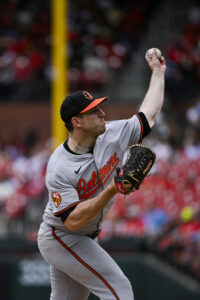
Left-hander Rich Hill doesn’t want to use the word but it seems to be leaning towards retirement. Appearing on the Baseball Isn’t Boring podcast, Hill was asked by host Rob Bradford if he was retiring and said “I don’t have any plans on playing next year.” The situation is somewhat analogous to that of Joe Kelly, who announced on the same podcast last month that he didn’t want to use the word “retire” but wasn’t planning on playing anymore.

“I’m looking for open possibilities to stay in the game of baseball and be a contributory factor,” Hill continued. “I enjoy the work aspect of whatever it might be that’s next. I think that’s one thing that… why athletes get hired in other positions and other… outside of sports is because they are highly-driven people that want to succeed. And that’s something that I’m looking forward to.”

It’s not shocking that Hill is slowly wafting into the next stage of his career. Though he did pitch in the 2025 season, he was easily the oldest player in the league. He was 45 years old when he suited up for the Royals and will turn 46 in March. Though he has continued pitching to an age when most other players have called it quits long ago, he did so with some unconventional approaches. He waited until midseason to sign in 2024 in a deliberate attempt to be more fresh for a stretch run.

If this is indeed the end, it will wrap up one of the more unique arcs of a player in recent history. Hill was drafted by the Cubs way back in 2002 and made his major league debut in 2005. He didn’t find immediate success but had a really good season in 2007, posting a 3.92 earned run average over 32 starts.

But from there, he went into a really challenging period of his career. He struggled with results and health for many years, leading him to be bounced between the majors and minors and between various different organizations. From 2008 to 2014, he tossed a total of 153 innings split between the Cubs, Baltimore, Boston, Cleveland, the Angels and Yankees. He posted a 5.41 ERA over that stretch.

2015 would turn out to be an incredible comeback season. He started the year on a minor league deal with the Nationals. He opted out of that contract in June and signed with the Long Island Ducks of the independent Atlantic League. He made just two starts for that club but struck out 21 opponents in 11 innings. That was enough to get him back into affiliated baseball via a minor league deal with the Red Sox.

Boston called him up in September and he made four starts as the season was winding down. In those, he logged 29 innings with a 1.55 ERA. He had a mammoth 34% strikeout rate, a tiny 4.7% walk rate and a strong 48.4% ground ball rate. That was a tiny sample size but the Athletics made a bet on it, signing Hill to a one-year, $6MM deal for 2016. That wager paid off handsomely, with Hill giving the A’s 14 starts with a 2.25 ERA.

At that year’s deadline, he was traded to the Dodgers alongside Josh Reddick, with the A’s getting Frankie Montas, Grant Holmes, and Jharel Cotton in return. Hill gave the Dodgers six starts with an ERA of 1.83 and then three postseason starts with a 3.46 ERA.

The Dodgers were happy enough with that showing to bring Hill back via a three-year, $48MM contract. That was a pretty staggering deal for a 37-year-old who was not too far removed from being in indy ball but it worked out well. He logged 327 innings over those three seasons with a 3.30 ERA, plus 37 postseason innings with a 2.43 ERA.

After that deal ran its course, Hill went into his 40s and mercenary mode. He signed a series of one-year deal with the Twins, Rays, Red Sox and Pirates. In 2023, he seemed to wear down as the season went along, not surprising for a 43-year-old. His 4.76 ERA with Pittsburgh was still respectable but he collapsed after a deadline deal to the Padres, posting an 8.23 ERA after the swap.

As mentioned, he then tried to think outside the box to continue as an effective big league pitcher. He planned to intentionally sign at midseason in 2024 in order to spend more time with his family and also save his bullets for the second half and postseason. He stayed unsigned until inking a minor league deal with the Red Sox in August. He did get called up but only for four relief appearances before being released. In 2025, he signed a minor league deal with the Royals in May. He got called up in July but was designated for assignment after just two starts.

Given the unusual shape of his career and his willingness to buck conventions, it’s possible he’ll change his mind and find his way back to the mound. But if Hill doesn’t make it back to the majors, he will finish with 1,418 innings tossed over 388 games for 14 different clubs. In that time, he posted a 4.02 ERA but will likely be best remembered for the 2015-2021 run which saw him post a 3.15 ERA in his late 30s and early 40s. Baseball Reference pegs his career earnings over $75MM, most of that coming to Hill in his late-career surge. We at MLB Trade Rumors salute him on a fine career, which may or may not be done, and wish him the best on whatever is next.

Photo courtesy of Peter Aiken, Imagn Images

Source: https://www.mlbtraderumors.com/2026/01/rich-hill-not-planning-to-play-in-2026.html
 
Back
Top